

mediterranean diet: healthy menu meal plan #72
plenty of protein for pennies

I have three stories about lentils. And they all fit a pattern.
My friend Ignacio, born and bred in Spain, has to be coaxed into eating lentils as an adult — hidden in a meatless bolognese sauce — because his mother fed them to him almost every day when he was little. Maybe a little too much of a good thing.
I recently watched my friend and world-famous chef María José San Román demonstrate the value of frying lentils in olive oil at a local event, and witnessed kids making a mad scramble after them like they were M&Ms. Healthy protein disguised as candy. Genius.
And her daughter Geni Perramon — Michelin restaurateur with five locations in Alicante — raises her three children on bowls of veggie-packed lentils every week without drama or fuss. She looked genuinely puzzled when I told her lentils hadn’t been part of my childhood. “But what did you eat?” she asked.
Fair point.
Lentils are on school menus here. They show up on weekdays at Geni’s table because they showed up on weekdays at her mother’s table, and on her grandmother’s before that.
Nobody makes a thing of it. They’re just there — cooked simply, eaten without ceremony, completely taken for granted in the best possible way.
And here’s what those Spanish mothers have known all along.


What makes them work
Lentils are one of the oldest cultivated foods in the world — at the very foundation of the Mediterranean diet — recommended not as an occasional addition but as a near-daily staple.
And unlike every other legume in that category, they require no soaking. None.
You rinse them, you cook them, and twenty-ish minutes later you have a protein source that would cost considerably more in any other form.
That practicality is the first thing that earns them a permanent spot in the pantry.
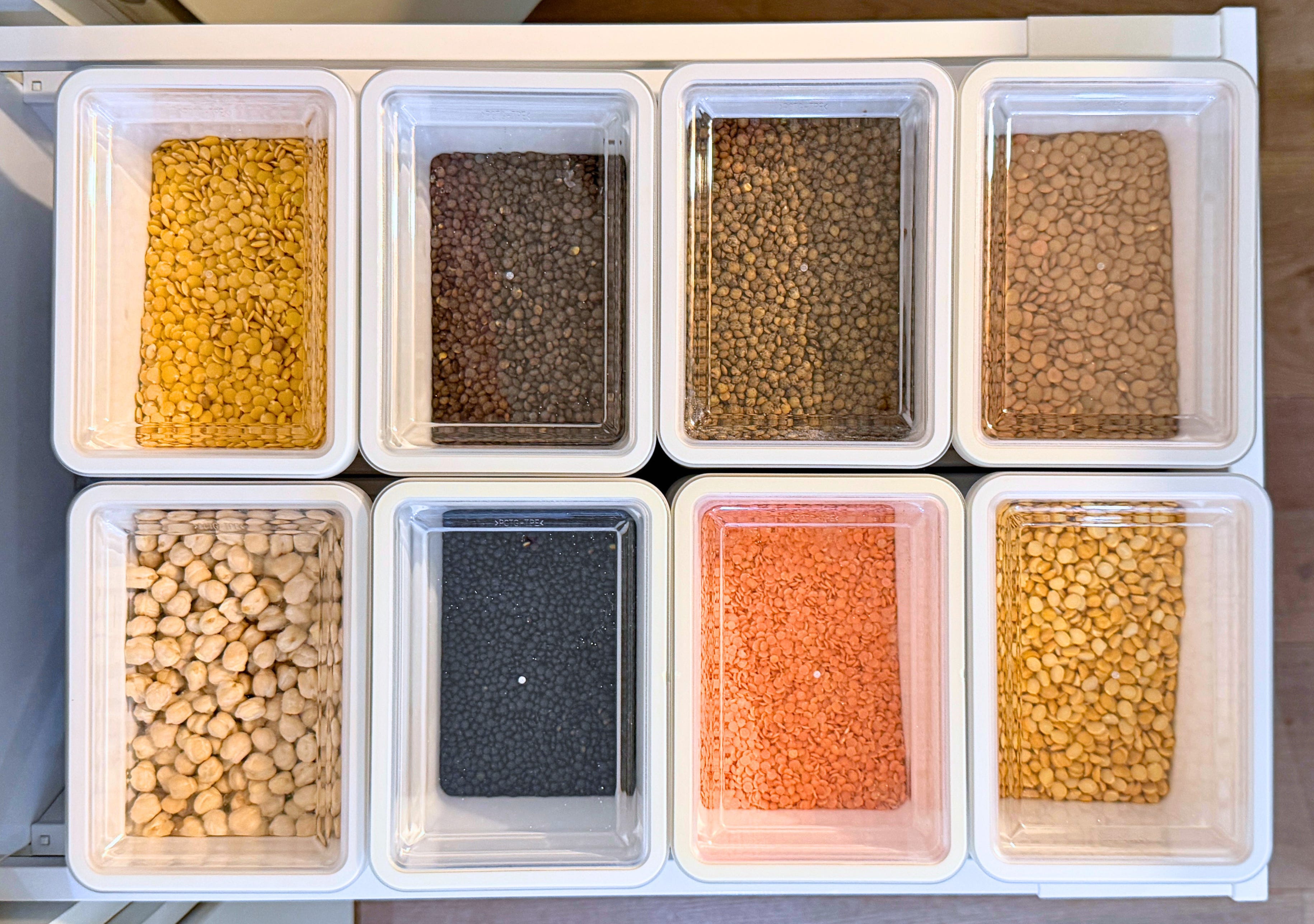
Which brings us to another one of my color-coded pantry drawers (remember the grain one?)
Tiny but powerful
One serving delivers around nine grams of plant-based protein alongside eight grams of fiber — a combination that stabilizes blood sugar, keeps you genuinely full, and does good things for your gut microbiome over the long term.
They’re rich in folate, magnesium and iron (more than most people expect from something this inexpensive), and loaded with polyphenols — the same antioxidant compounds in olive oil and red wine that researchers keep pointing to when they try to explain why Mediterranean populations tend to age so well.
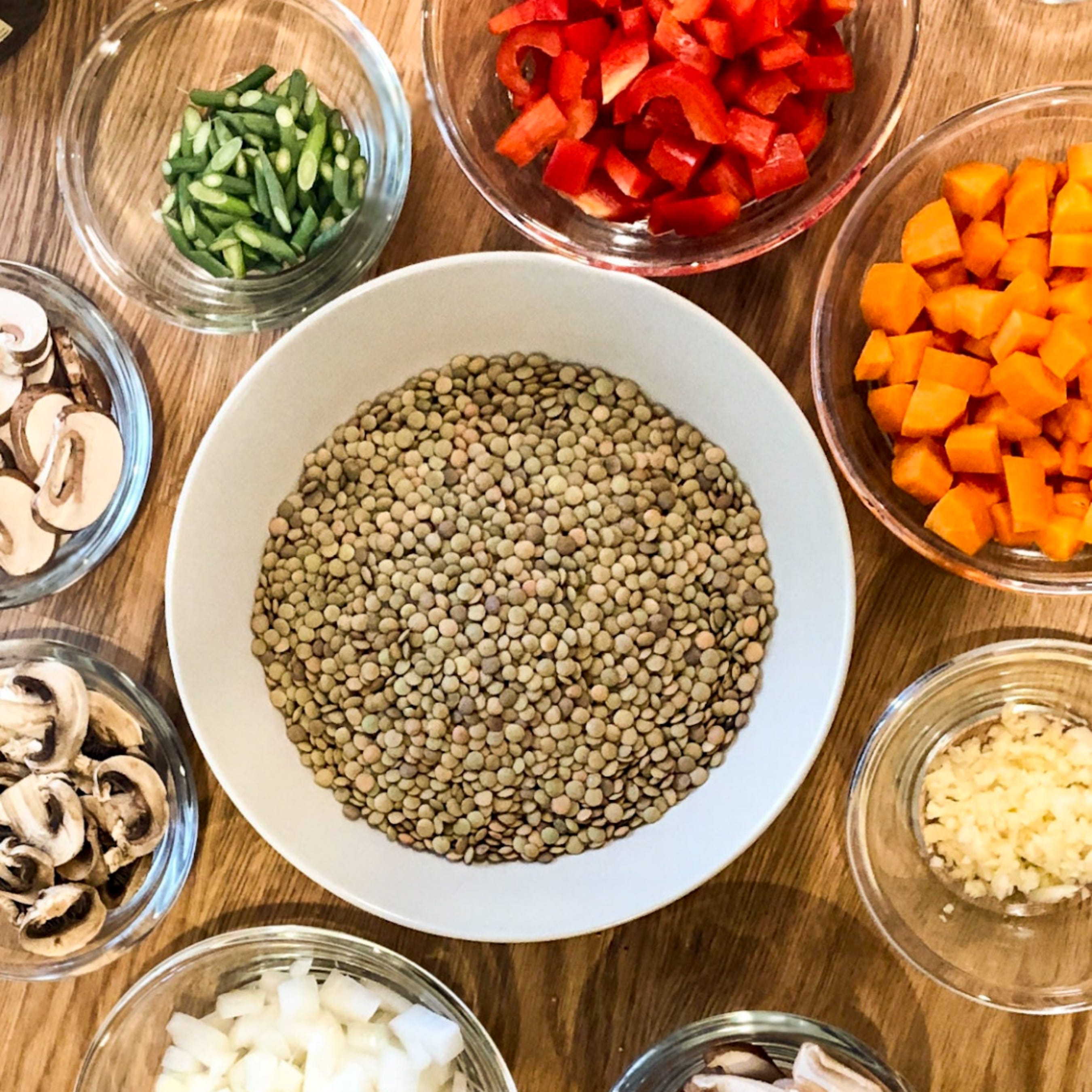
And then there is the flavor question. Lentils have an earthy, subtly nutty depth that absorbs whatever you put near them — veggies, lemon, olive oil, fresh herbs, a good vinaigrette — and gives it back to you with something extra.


Red lentils melt into silky soups and dips. Black lentils are intensely flavored and hold up beautifully in warm salads. Green and French Puy lentils hold their shape through cooking, which makes them the natural choice for grain salads and composed plates.
All these varieties are worth getting to know.
Meet your legumes
Lentils get the spotlight this week, but they’re just one member of a remarkably versatile family.
Beans and legumes come in enough varieties that you could rotate through them all week without repeating yourself — and the Mediterranean diet, which recommends them three to four times a week, essentially encourages you to do exactly that.
Each one brings its own flavor, texture and nutritional personality to the table.
Some hold their shape beautifully in salads. Some melt into silky soups. Some are best slow-cooked into something rich and deeply satisfying.
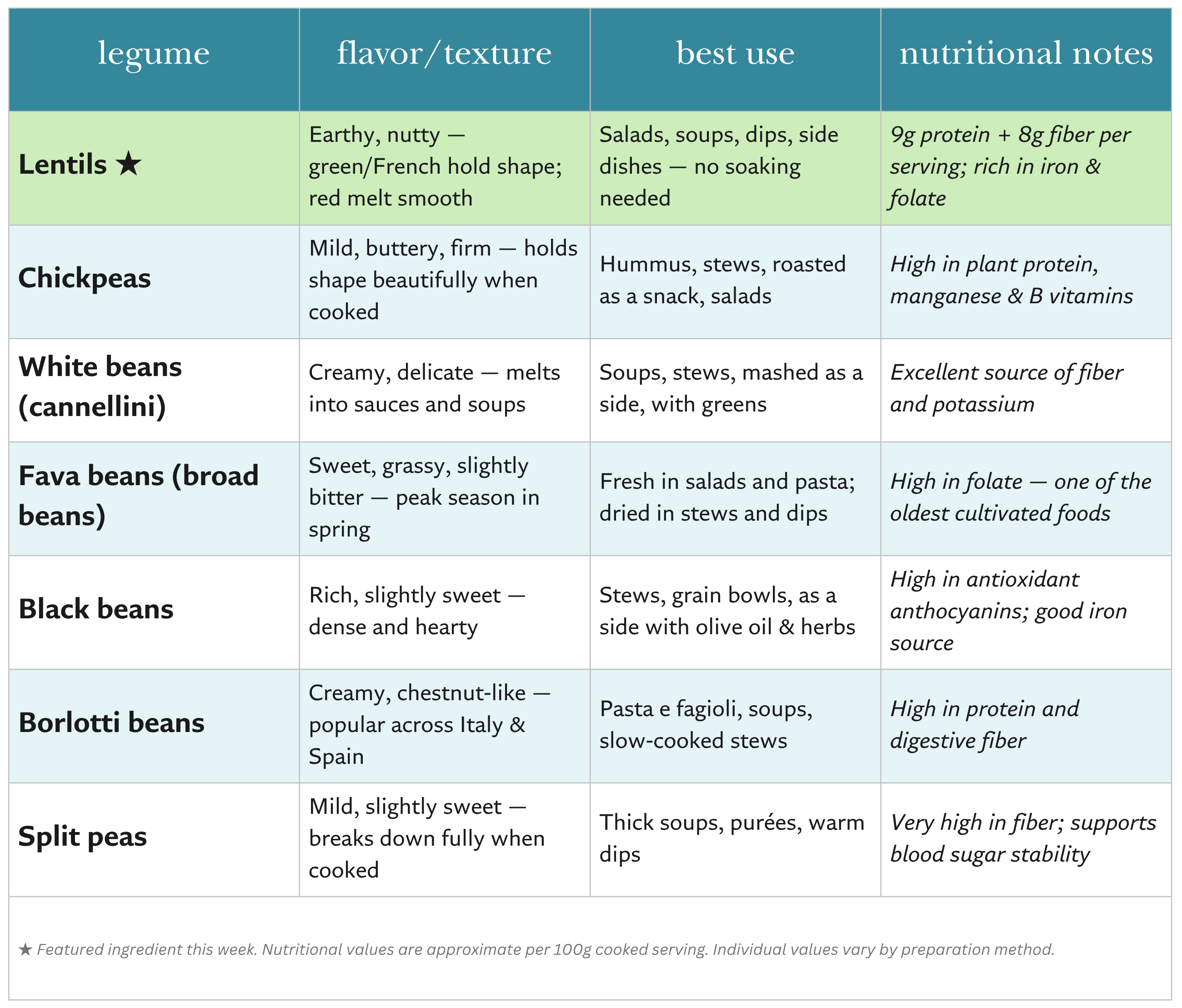
The chart below is a quick reference for the ones worth keeping in your pantry — a starting point for getting comfortable with the whole family, not just the one you already know.
how they fit into today’s menu
Today’s menu puts legumes front and center — not just at lunch, but woven through the whole day.
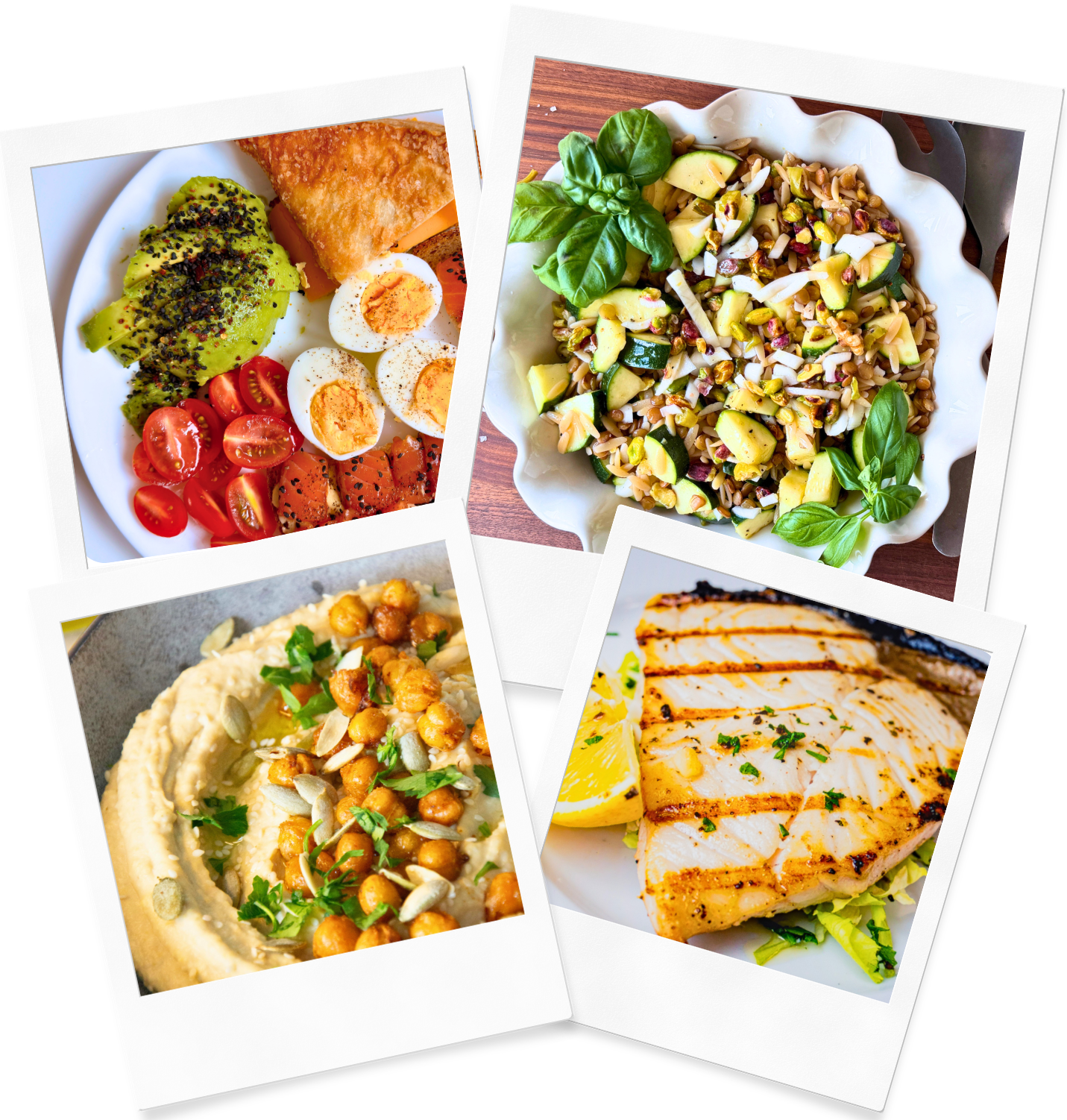
It starts at snack time with hummus and crudités — chickpeas at their most elemental, creamy and satisfying in a way that also happens to take about ninety seconds to put together if you have a batch in the fridge. The recipe is on my website and it’s one I make on rotation.
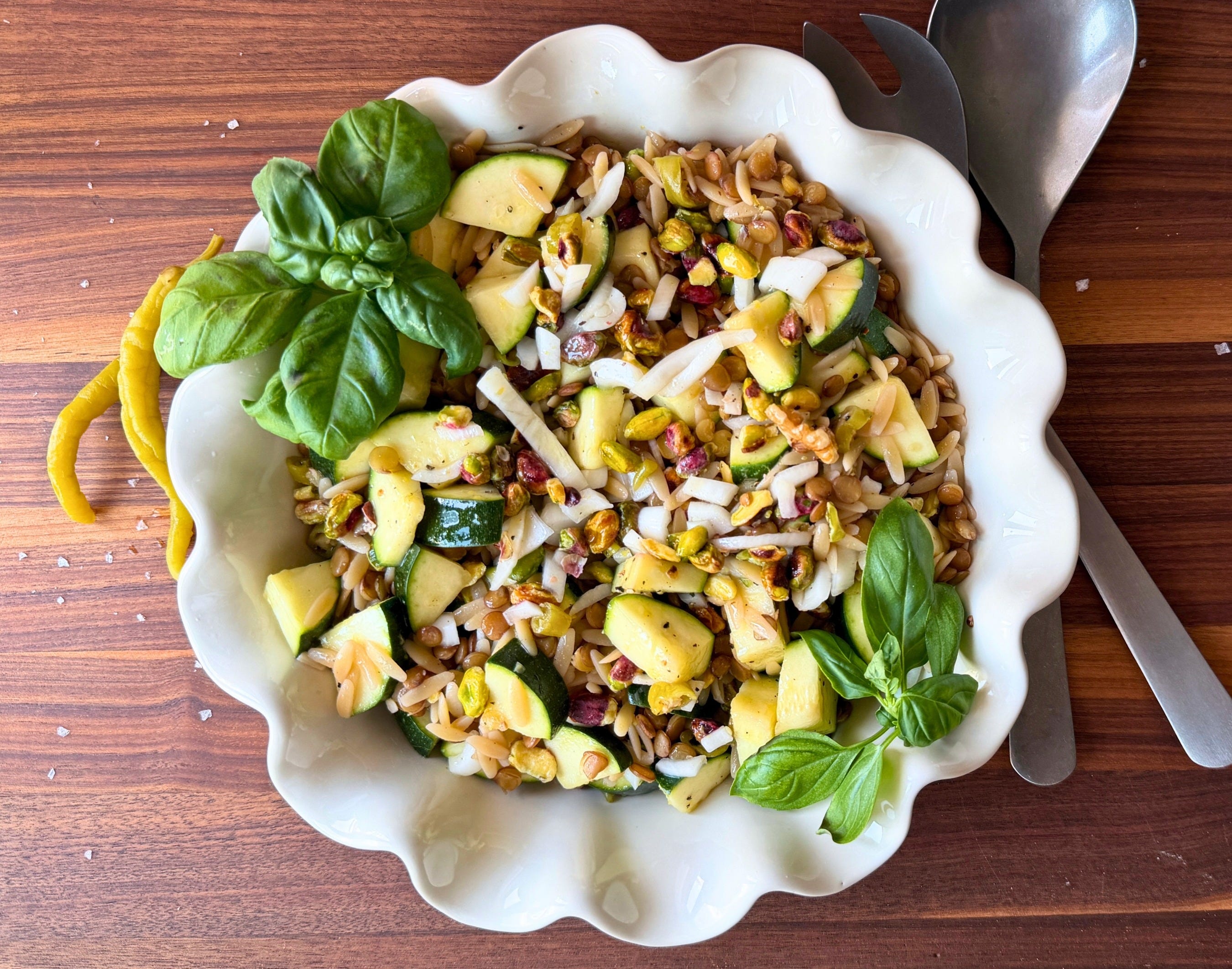
This week’s featured recipe is an Lentil Salad with Orzo and Zucchini.
Brown lentils are the right call here — they hold their shape through cooking without going mushy, absorb the lemon and olive oil vinaigrette without losing their texture, and bring just enough earthy depth to anchor a dish that could otherwise feel too light for a proper lunch. They’re doing the simple structural work that makes the whole bowl hang together.
And dinner brings the third legume of the day: a white bean salad with roasted red peppers, red onion and fresh parsley alongside grilled swordfish. A small homage to growing up in the Midwest — cannellini beans standing in for the navy beans of my childhood, dressed rather better than they ever were back then.
Three different legumes. Three completely different preparations. One very good day of eating.
If you remember the three Spanish stories at the start of this post, you’ll find a few extra recipes in this week’s PDF that speak to each of them — meatless bolognese for Ignacio, María José’s fried lentils, and a simple everyday lentil bowl in Geni’s spirit. My way of closing the loop.


If you’re already a paid subscriber, you’ll know that this is just one of the small extras that show up almost every week — my way of saying thank you for being part of this community.
And if you’ve been on the fence about joining, this might just be a really good week to see what you’d be getting.
But right now, it’s time to pull up a chair, grab a glass or cup and join me in my Mediterranean kitchen while we work our way from one flavor-packed meal to another.
