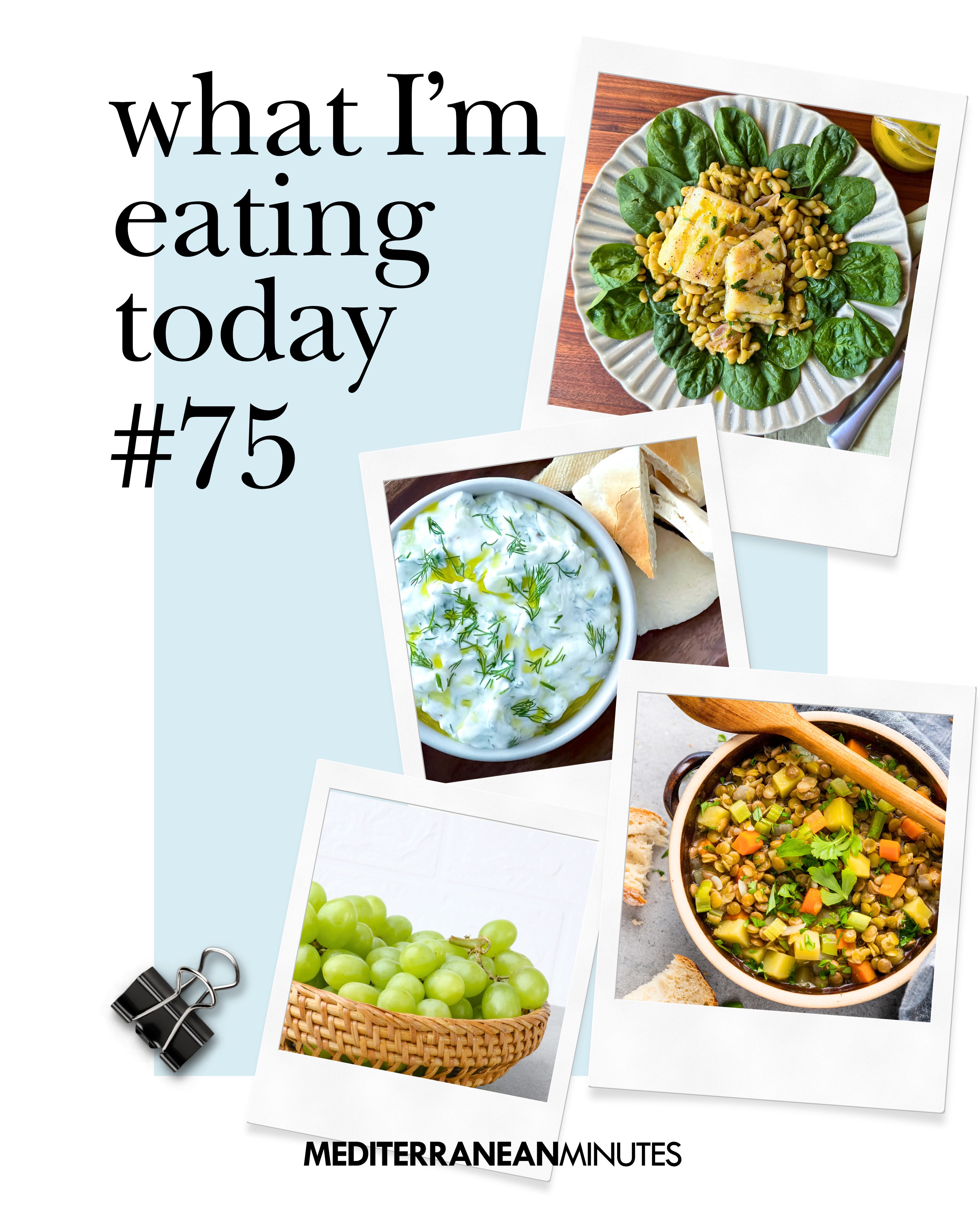
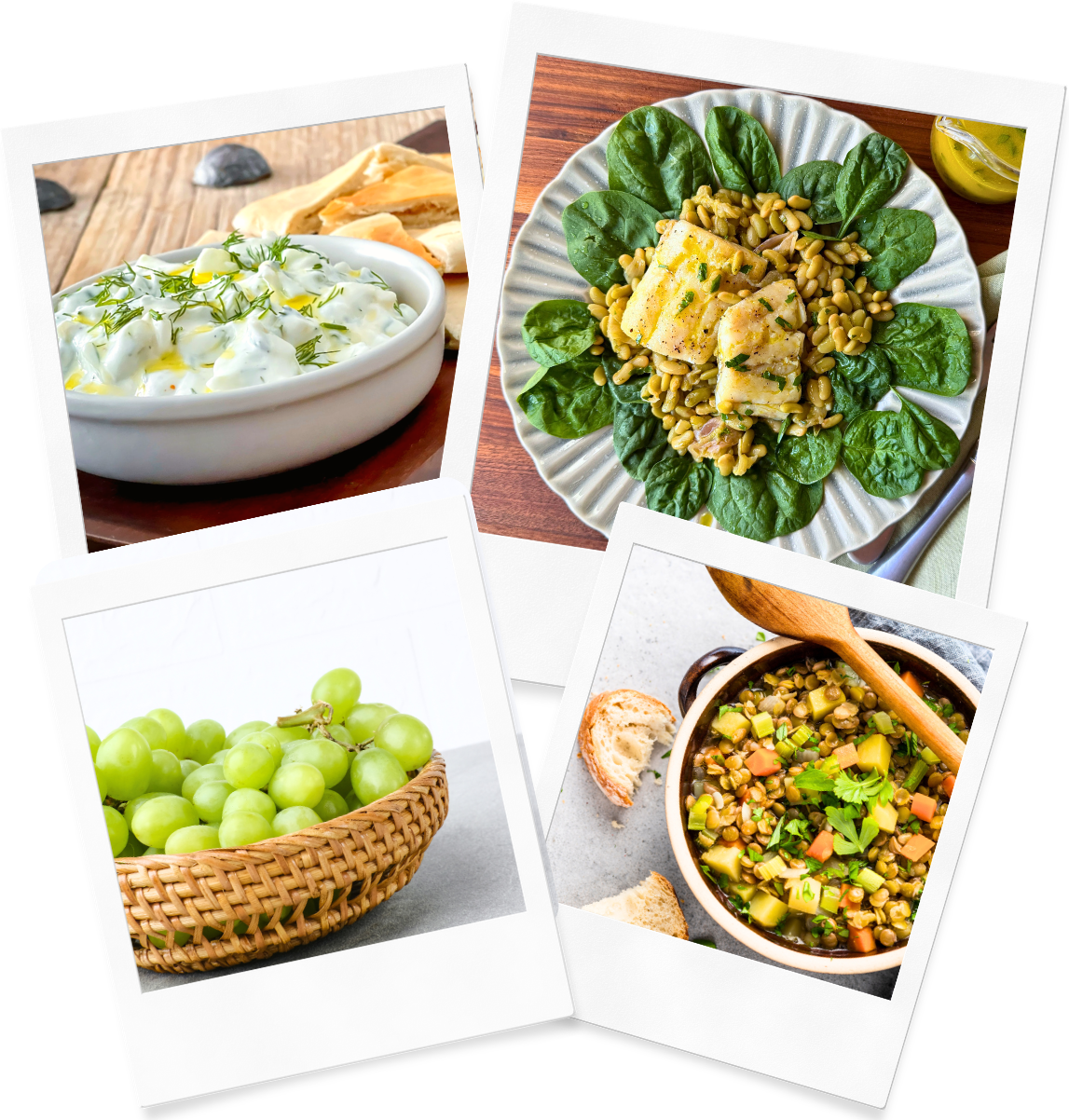
mediterranean diet: healthy menu meal plan #75
everyday fish for fish any day

If you’ve ever shopped for fish in a typical American grocery store, you know what the fish counter (if they have one) looks like. Fresh or flash-frozen pre-packaged options. Some salmon. Some shrimp. Maybe tilapia. Next to the much larger meat section that might even be staffed by a butcher.
It’s a little different here. Grocery stores all have a long fish counter manned by staff that clean and prep your fish and seafood to order. Where I shop, the central market in Alicante has more than a hundred fishmongers.
More than one hundred.
With countless types of seafood and fish to choose from.
When I walked into the first floor of the market for the first time, I almost didn’t know which way to turn. Whole fish on ice. Octopus, squid, and cuttlefish. An entire counter of different types of clams. Shellfish still moving. And the fishmongers — patient, opinionated, confident that whatever they had was exactly what I needed to take home.
I made myself a promise to eventually try them all. But began with something familiar.
I dipped my toe in the water (thanks for the lessons in pun-making, Dad) and started with cod.
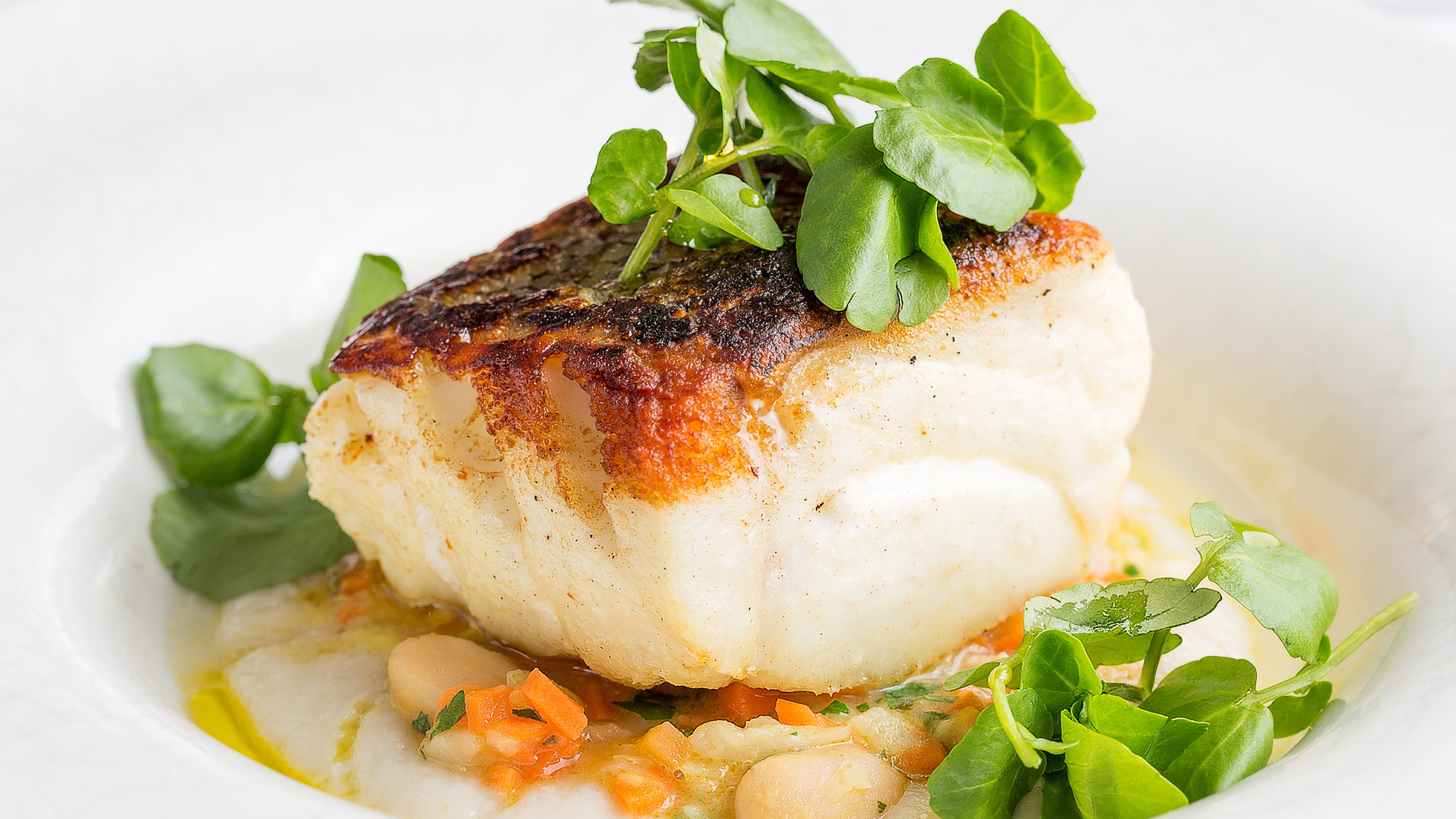
Because cod was everywhere. Because the Spanish have been eating it for centuries. Because dried bacalao — salt-cured cod — is as fundamental to Spanish cooking as olive oil and garlic, and if a culture has been doing something that long, it’s usually worth paying attention to.
what makes it work
Here in the Mediterranean, fish is a centerpiece — recommended at least 2-3 times per week, every week, as one of the diet’s most consistent sources of lean protein, omega-3 fatty acids, and a lineup of micronutrients that most people aren't getting enough of.


And when you think about fish and the Mediterranean diet, salmon is probably what comes to mind. Salmon is wonderful — rich, fatty, and a great source of omega-3s. George and I eat it almost every week.
But the Mediterranean diet’s recommendation to include fish in your diet every week wasn’t written with one type of fish in mind. It’s built on variety — fatty fish, white fish, shellfish and other seafood whenever you can get them.
So I want to take a minute and talk about lean white fish. Cod, tilapia, hake, halibut, sea bass, snapper, sole. The ones that don’t get nearly as much attention but deserve it. And here’s why.
fatty v. lean
Fatty fish like salmon, mackerel, sardines, and tuna get their omega-3s from fat stored throughout the flesh — which is why they taste so rich and succulent and why they are always a Mediterranean diet recommendation.


White fish store fat primarily in their liver rather than their flesh, which means the fillet itself is super lean — low in calories, high in protein, and light enough to eat several times a week without ever feeling heavy.
Cod specifically delivers around 20 grams of protein per 100 grams — on par with chicken breast — with almost no fat to speak of. It’s also a meaningful source of B12, iodine, selenium, and phosphorus. B12 for your nervous system and energy metabolism. Iodine for thyroid function. Selenium as an antioxidant. Phosphorus for bone health.
double duty
While a beautifully sautéed fillet of cod supported with a simple sauce or side is an elegant option for a light lunch, one of the things I love most about this week’s recipe is that I’ve teamed up those fillets with another protein powerhouse, French flageolet beans.
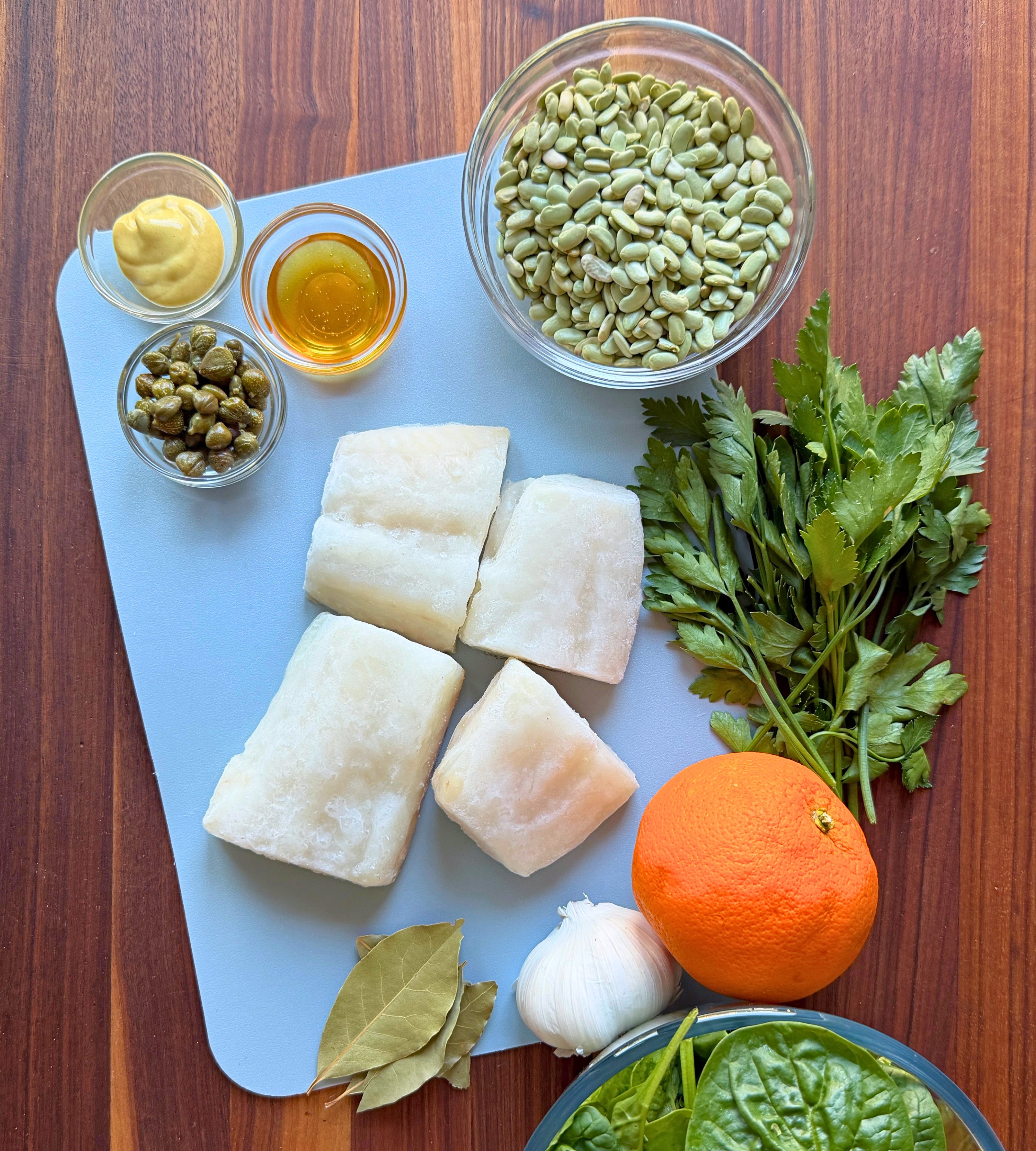
Flageolet beans — pale green, creamy, and one of the most prized legumes in Mediterranean cooking — are among the best plant sources of protein you can put on a plate. Combined with the cod, served on a bed of fresh spinach, a single serving of this dish delivers around 40 grams of protein before the salad even shows up.
The combination also hits fiber, iron, folate, and magnesium in one bowl — nutrients that white fish on its own doesn’t cover. They work together in a way that neither one quite manages alone.
Which is, if you think about it, a pretty good description of Mediterranean cooking too.
this week’s recipe
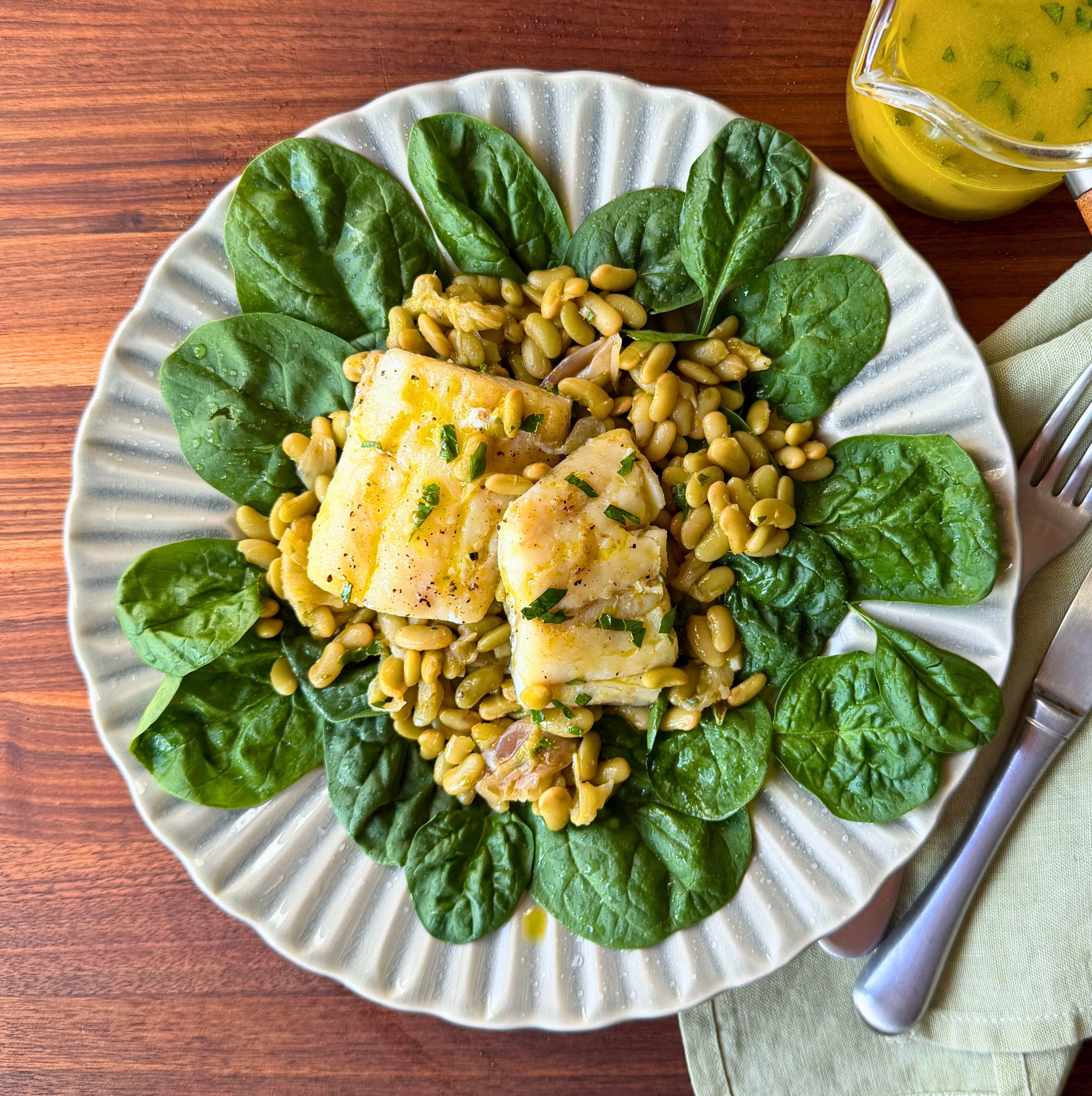
I’d seen variations of a citrus-caper sauce floating around for years. Some leaned heavily on the capers, some on the citrus, some added mustard, some didn’t. Mine is a simple riff: fresh orange juice and zest, lemon juice to keep it bright, capers roughly chopped so they distribute through the sauce rather than sitting in clumps, a little honey to round out the acidity, Dijon, good olive oil, and fresh cilantro (if cilantro’s not your thing, swap in parsley).
It takes about three minutes to make and it does a remarkable amount of work on the plate.
The brightness of the orange lifts the earthiness of the beans. The capers add a briny edge. And the cod — pan-seared until it just flakes — sits on top of it all looking exactly as good as it tastes.
how the rest of the day shapes up
The menu this week is built to let the featured recipe do its thing at lunch without competing with anything else.
Breakfast is a warm whole grain pita with hummus, tomato, cucumber and za’atar — the kind of thing that takes five minutes and keeps you going all morning. A small glass of fresh orange juice alongside, because even though it’s June, the Valencia oranges are still wonderful.
Mid-morning: a handful of grapes, a few walnut halves, and a square of dark chocolate. No explanation needed.
Lunch is the cod and beans on a bed of spinach with a simple mixed green salad.
The afternoon snack leans savory — whole grain crackers with tzatziki and radishes, plus another juicy end-of-season orange. Crunchy, cooling, just right for a warm June afternoon in Alicante or anywhere else.
Dinner is a slow-cooked vegetable and chickpea tagine (think: a deeply spiced Mediterranean stew) over whole wheat couscous with a little drizzle of a slightly spicy harissa yogurt. Bell peppers, eggplant, zucchini, canned tomatoes, chickpeas — everything that’s good right now, served over a generous cup of couscous.
If you’re already a paid subscriber — thank you. Genuinely. Every issue exists because you’re here. And it means you already know the weekly PDF usually includes a few bonus recipes too.


All variations on the white fish theme. All proof that white fish is the most versatile fish at the market. And all plucked from the archives of my Substack.
If you’ve been reading the free issues and wondering what’s on the other side of the paywall — the recipes, the full menus, the shopping lists, the archive — this is a great week to check it out.
So if you’ve unlocked all these goodies with a subscription, it’s time to pull up a chair, grab a glass of something cold or a cup of something hot, and join me in my Mediterranean kitchen while we work our way from one flavor-packed meal to another.
The cod is sizzling in the pan. The beans are tender and ready. The orange-caper sauce is three minutes away.