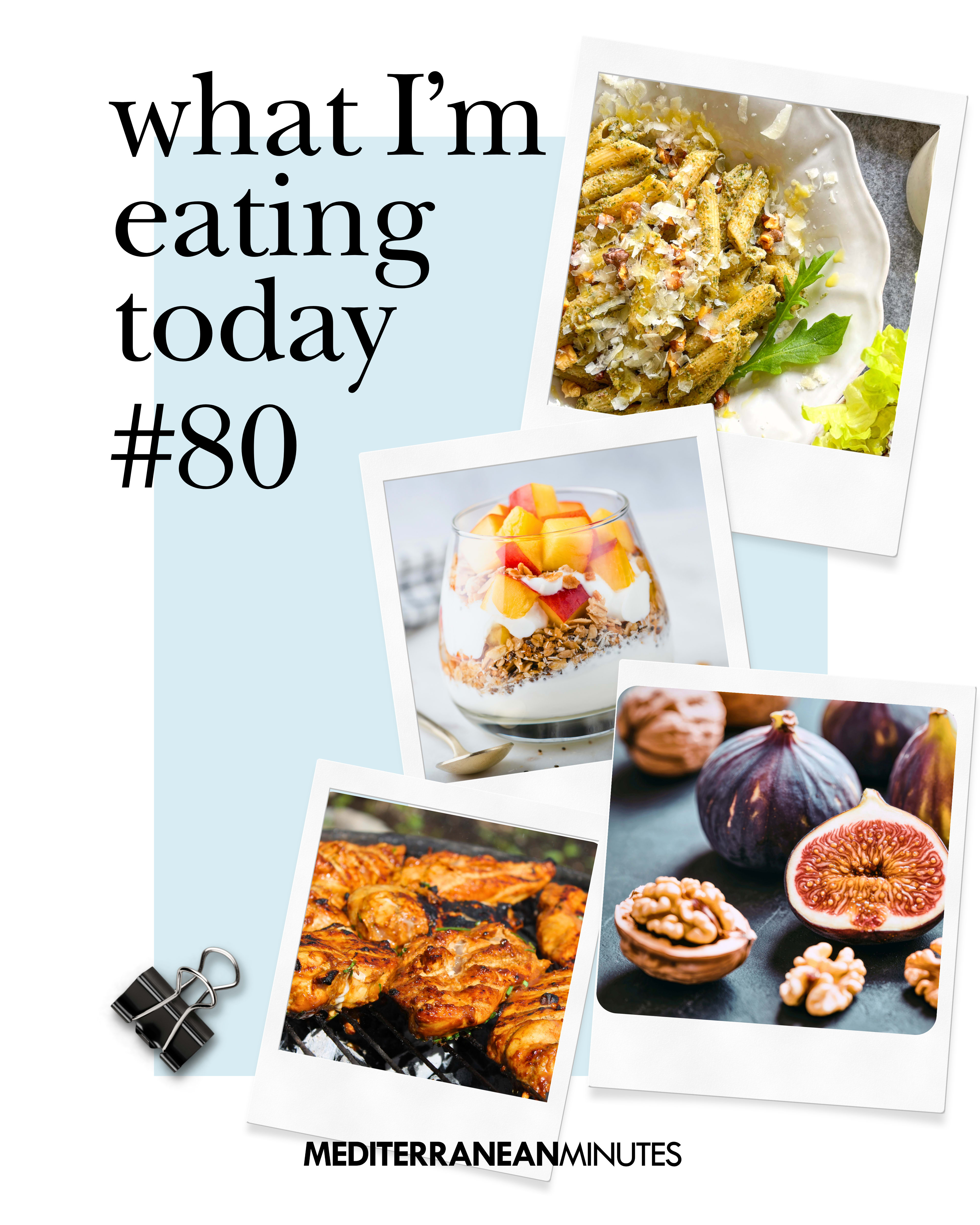
mediterranean diet: healthy menu meal plan #80
one (wal)nut above all

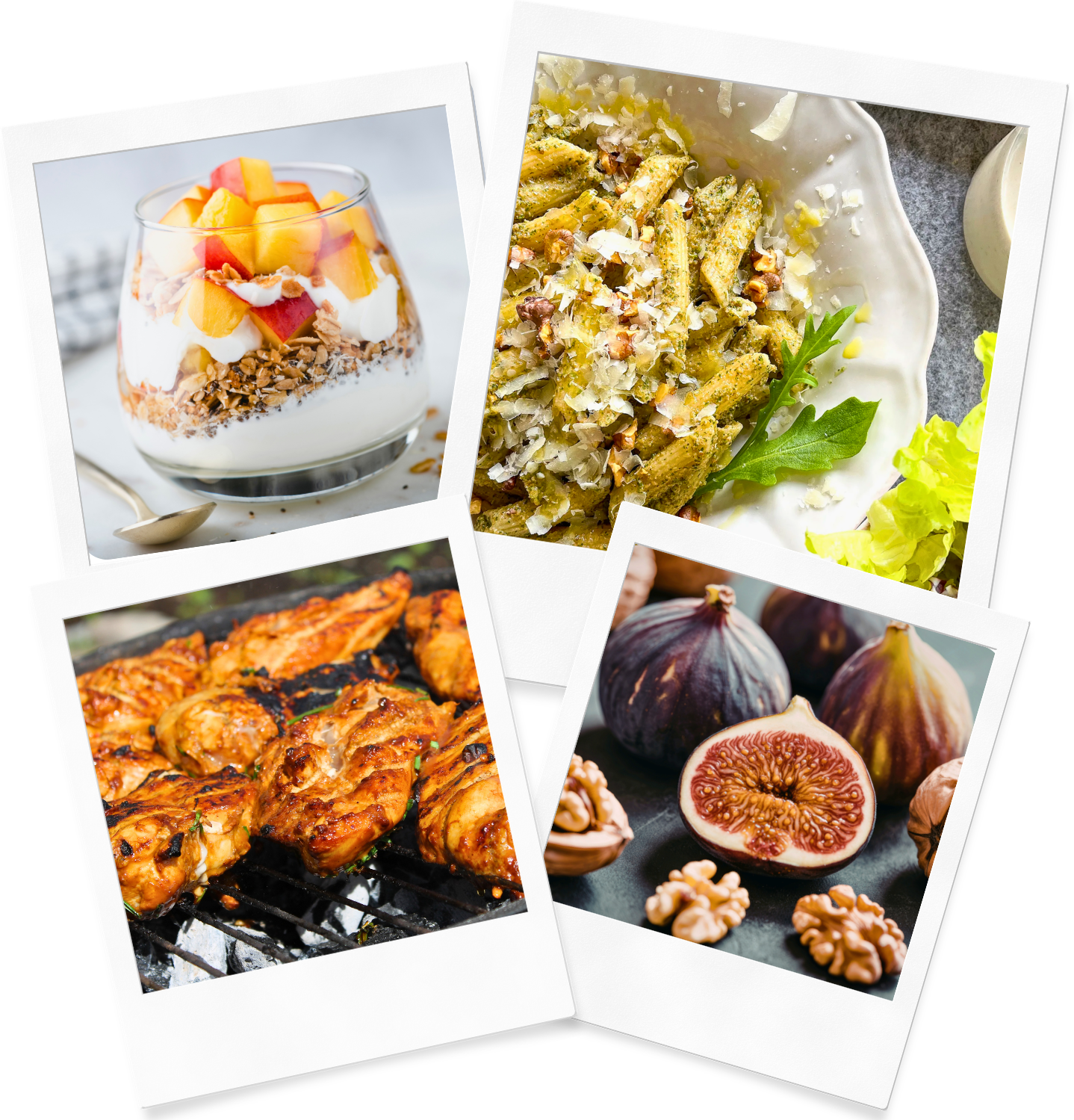
Sooner or later, you are going to know what’s in every single one of my kitchen pantry drawers. You’ve seen the grains drawer. You’ve seen the pasta drawer. Today’s big reveal is the nuts drawer.
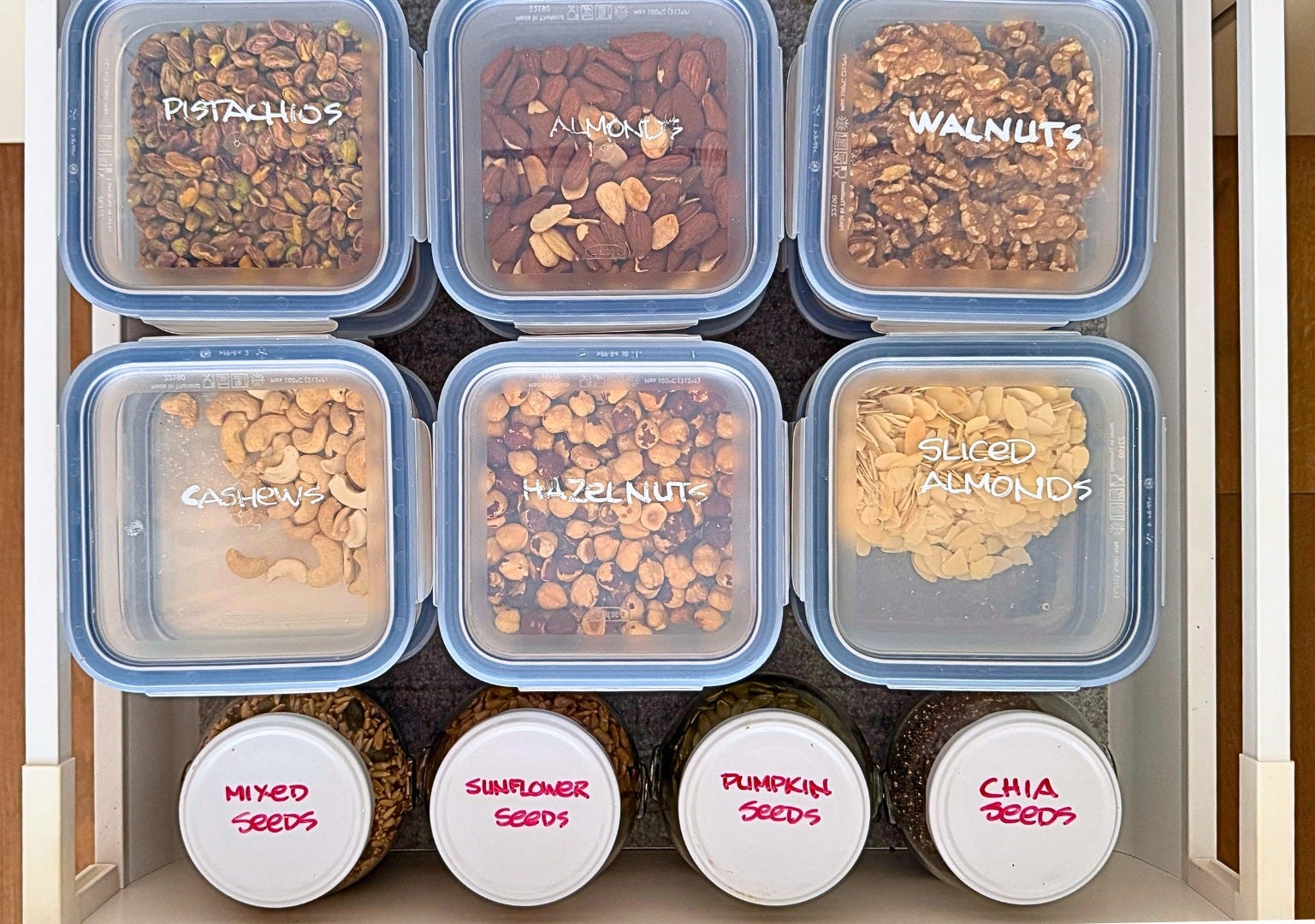
Nuts are a big deal in our house. So I picked one of the Mediterranean diet’s most nutritionally powerful ingredients - the walnut - to be the star of today’s post.
The menu features a lunch that’s a riff on a classic with just two simple swap-outs: affordable omega-3 packed walnuts in place of pricey pine nuts and spicy arugula subbing in for sweet basil.
Turns out it’s one of the tastiest, easiest pestos in my repertoire and one of those dishes that tastes far more indulgent than it has any right to.
what makes it work
The Mediterranean diet places nuts and seeds in the same category as legumes and fish — recommended several times a week as a source of healthy protein, healthy fat, and a dense lineup of micronutrients that are hard to get anywhere else.


Walnuts sit at the top of that category for one specific reason: they are the only nut that contains a significant amount of ALA — alpha-linolenic acid — the plant-based form of omega-3 fatty acids. Your body cannot produce omega-3s on its own. You have to eat them to get them.
And while fatty fish like salmon are the most concentrated source, walnuts are one of the most accessible plant-based alternatives for anyone looking to hit the Mediterranean diet’s omega-3 targets without eating fish every day.
Beyond omega-3, walnuts deliver vitamin E, magnesium, copper, folate, and a collection of polyphenols that support brain health, reduce inflammation, and contribute to cardiovascular protection over time.
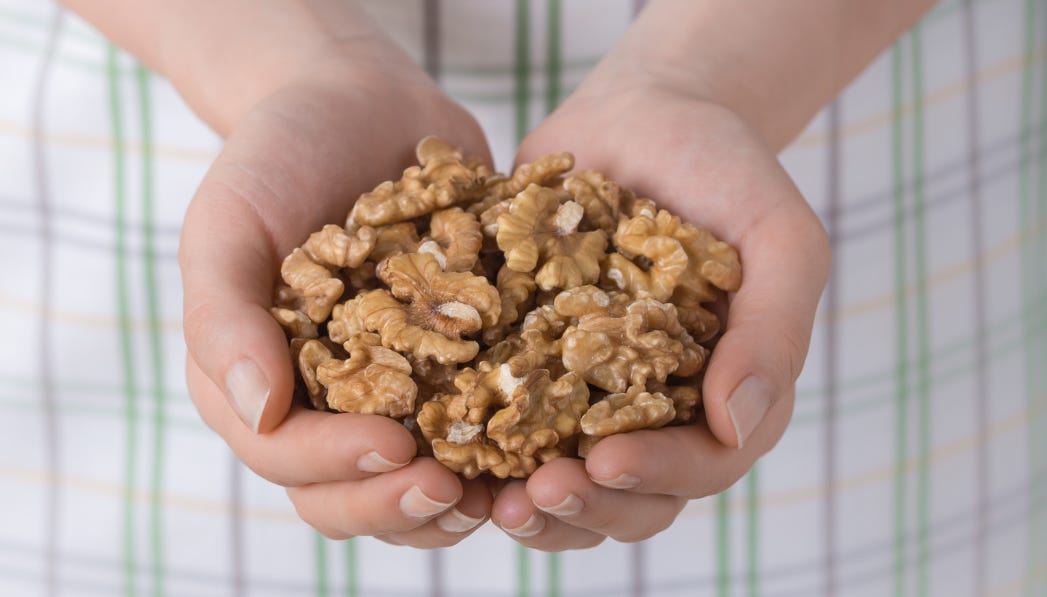
Research consistently links regular walnut consumption — as little as a small handful a day — to improved cholesterol profiles, better blood sugar regulation, and reduced markers of inflammation.
They are also one of the most satisfying nuts you can eat. The combination of healthy fat, protein, and fiber means that a small amount goes a long way toward keeping you full — which is why you’ll find them turning up at snack time in this week’s menu alongside fresh figs, and in the pesto itself as the foundation of the sauce.
what to do with them
Today’s pesto starts with toasted walnuts — a quick five minutes in the oven or air fryer (which I always use because it’s simply a lot less energy and takes a lot less time) until they’re fragrant and slightly golden — then into the food processor with garlic, lemon, Parmesan, olive oil, and four cups of fresh arugula. Bam. Done.
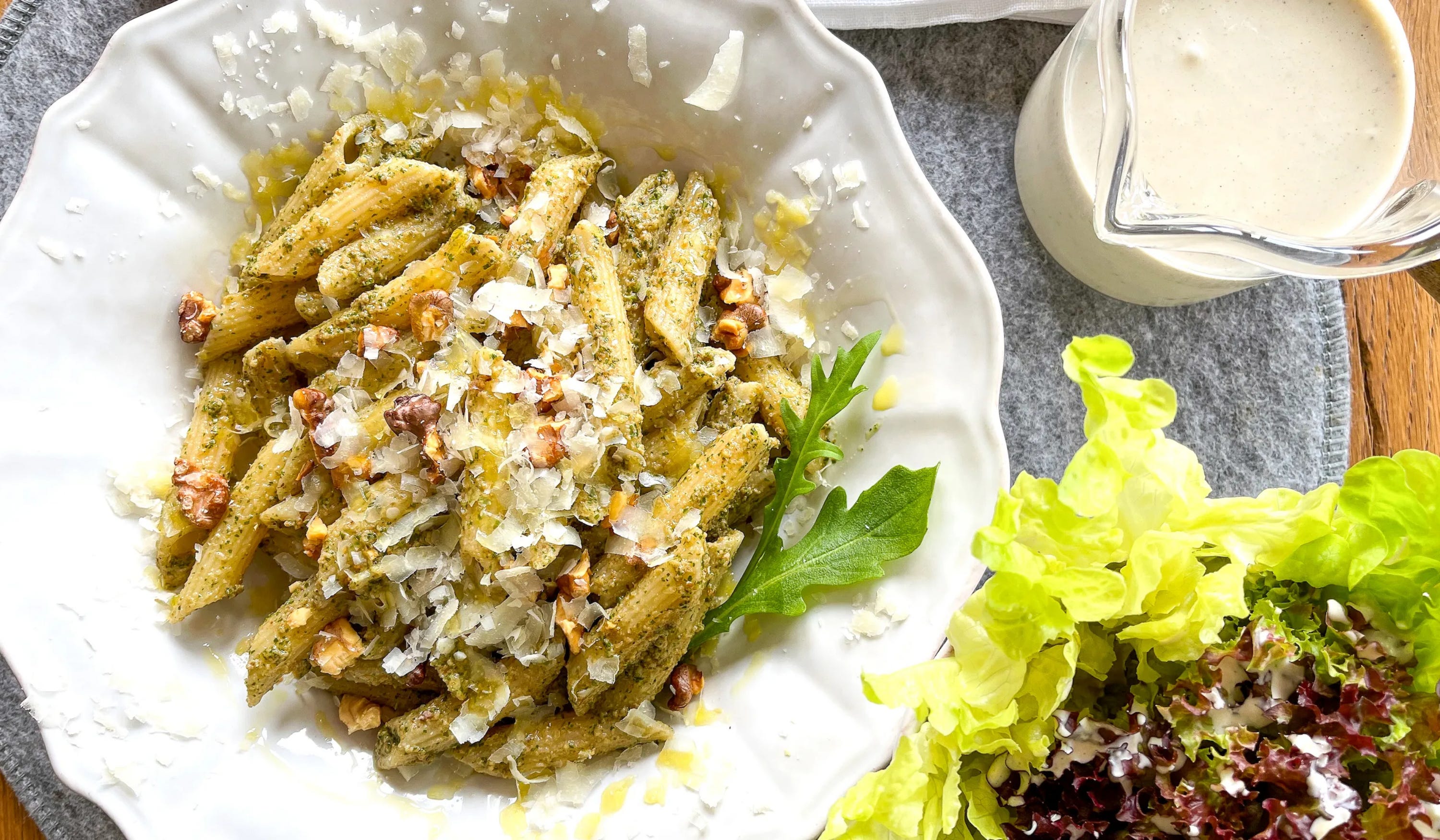
The arugula is the choice here rather than the more classic basil because it brings a peppery bite that balances the richness of the walnuts and olive oil in a way that basil simply doesn’t. The result is a pesto that’s more complex, more interesting, and — maybe — more Mediterranean.
Toss it with whole grain rotini or any other shell type pasta you have on hand, top it with some of those roasted walnut bits and a dusting of Parmesan, surround it with a light lettuce salad. That’s lunch.
One of my “indispensable” tips that’s worth knowing: this pesto freezes beautifully. I make a full batch, fold it into ice cube trays, freeze until solid, then transfer the cubes to a labeled and dated freezer bag. Each cube is roughly one tablespoon — a perfect single serving. Pull out what you need, defrost in minutes, and you have pesto on the table on any weeknight with almost no effort. It keeps for months, so make a big batch and thank yourself later.
If you want to watch me make it, the video is less than a minute but if you can’t spare the time, don’t worry, the full recipe is in your PDF below.
a note about today’s menu
A quick note before we get into it: pesto is a fat-dense sauce by nature. The olive oil and walnuts together push the fat percentage higher than a typical Menu of the Day — but this is exactly the kind of fat the Mediterranean diet is built on.
Heart-healthy, unsaturated, and genuinely good for you. If you’d prefer a lighter version, use one tablespoon of pesto per serving instead of two. The flavor is still there.
The rest of the day is built to let the pesto pasta do the work at lunch — lighter snacks and a clean grilled chicken and brown rice dinner in the evening keep the day balanced.
If you’re already a paid subscriber — thank you. Every issue exists because you’re here.
If you’ve been reading the free issues and wondering what’s waiting on the other side — the recipes, the full menus, the shopping lists, the archive — this is a good week to find out.
But right now, it’s time to pull up a chair, grab a glass or cup, and join me in my Mediterranean kitchen while we work our way from one flavor-packed meal to another.
The walnuts are toasted. The arugula is ready. The food processor is standing by.