


The first year we moved to Alicante Spain, there was a crazy windstorm and the entire seaside city (and our apartment patio) was covered in fine reddish-yellow dust. The skies and the sidewalks were the same eerie shade for days.
It just didn’t make sense.
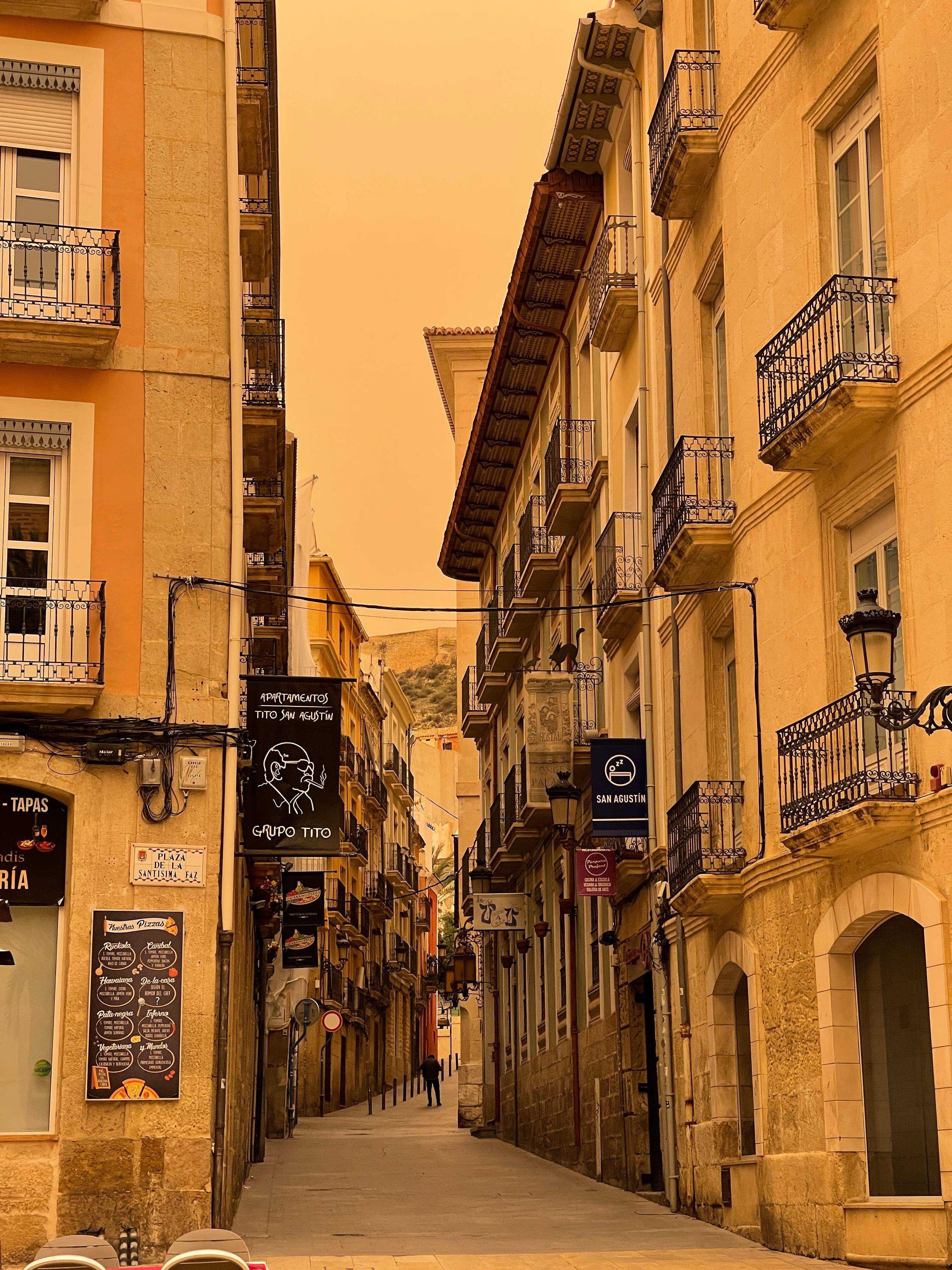
Then somebody casually mentioned it was just the Sahara sands. No biggie.
And it brought home just how close we live to Morocco, Algeria and the northern deserts where Europe and Africa are practically breathing on each other.
In Mediterranean terms, it’s a neighbor. And its flavors — cumin, pimentón (paprika - three kinds no less), harissa, preserved lemon, the deep red heat of Moroccan spice pastes — have always felt completely at home in Spanish kitchens and mine.
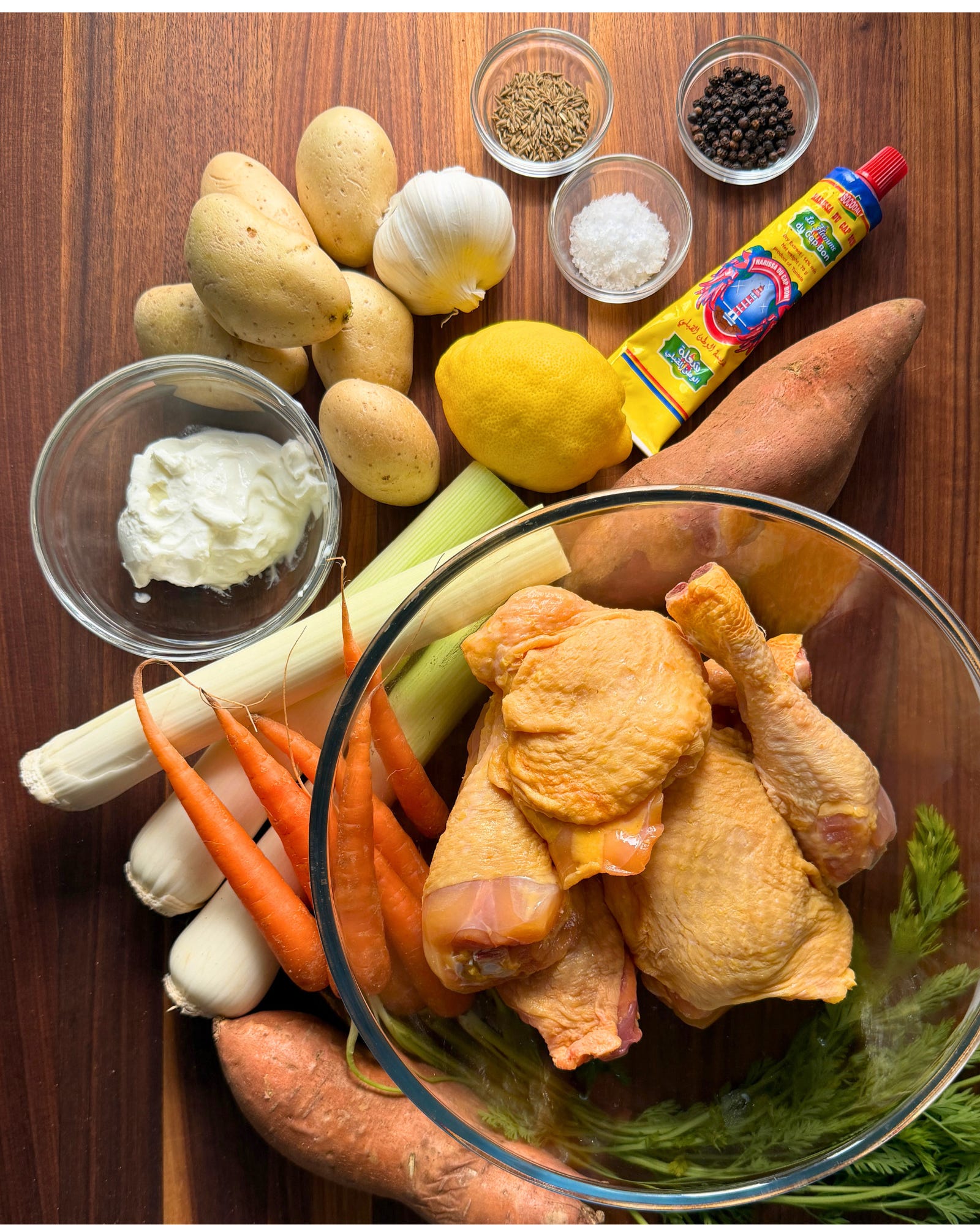
In creating today’s menu, I reached for local spice blends and ingredients that have become common place over the years. My hands-down favorite? A tube of harissa paste.
While this week’s featured recipe originated in my own backyard, it arrived in my hands the way the best recipes often do: handed down through a chain of people who love food. Melissa Clark published a version of it in the New York Times back in 2017. David Lebovitz — one of my long-time favorite food writers and bloggers — picked it up and made it his own. And then I found it through David and made it mine.
As the youngest of five sisters, I’ve always known that the best things come to you a little late, already broken in and improved by everyone who had it before you.
This is that kind of recipe.
What makes it work
Chicken sits in an interesting spot in the Mediterranean diet. It’s not the star of the show the way fish is, and it’s not the occasional indulgence that red meat represents. It occupies the middle ground — a reliable, versatile protein that the Mediterranean diet recommends a few times a week, and one that earns its place at the table without demanding much attention - or effort.
That’s exactly what makes it useful.


A skin-on, bone-in chicken thigh or leg is nutritionally quite different from the boneless, skinless breast that tends to dominate diet culture.
The darker meat carries more fat — but the right kind. Monounsaturated and polyunsaturated fats, the same family that makes olive oil so valuable, are well represented here.
It’s also richer in iron, zinc and B vitamins, particularly B12 and B6, than breast meat, and the collagen in the skin and around the joints supports joint health in a way that leaner cuts simply don’t.
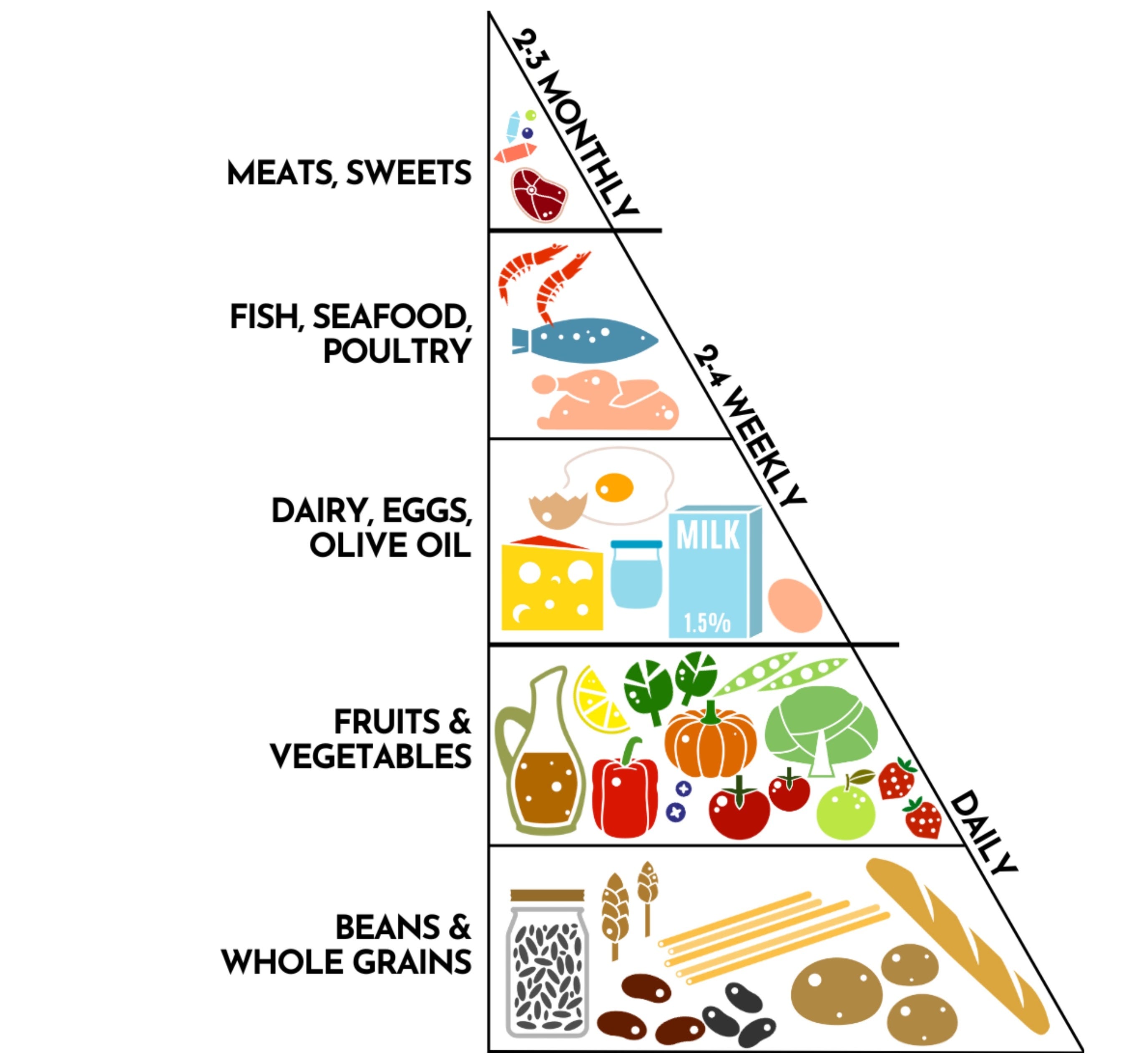
In the Mediterranean diet pyramid, poultry sits with fish and seafood, less frequent than the daily plant-food foundation of vegetables, legumes, whole grains and olive oil.
Two to four servings a week is the general rule — enough to provide consistent protein and those fat-soluble nutrients without crowding out the plant foods that do the heavier nutritional lifting.
And then there’s harissa
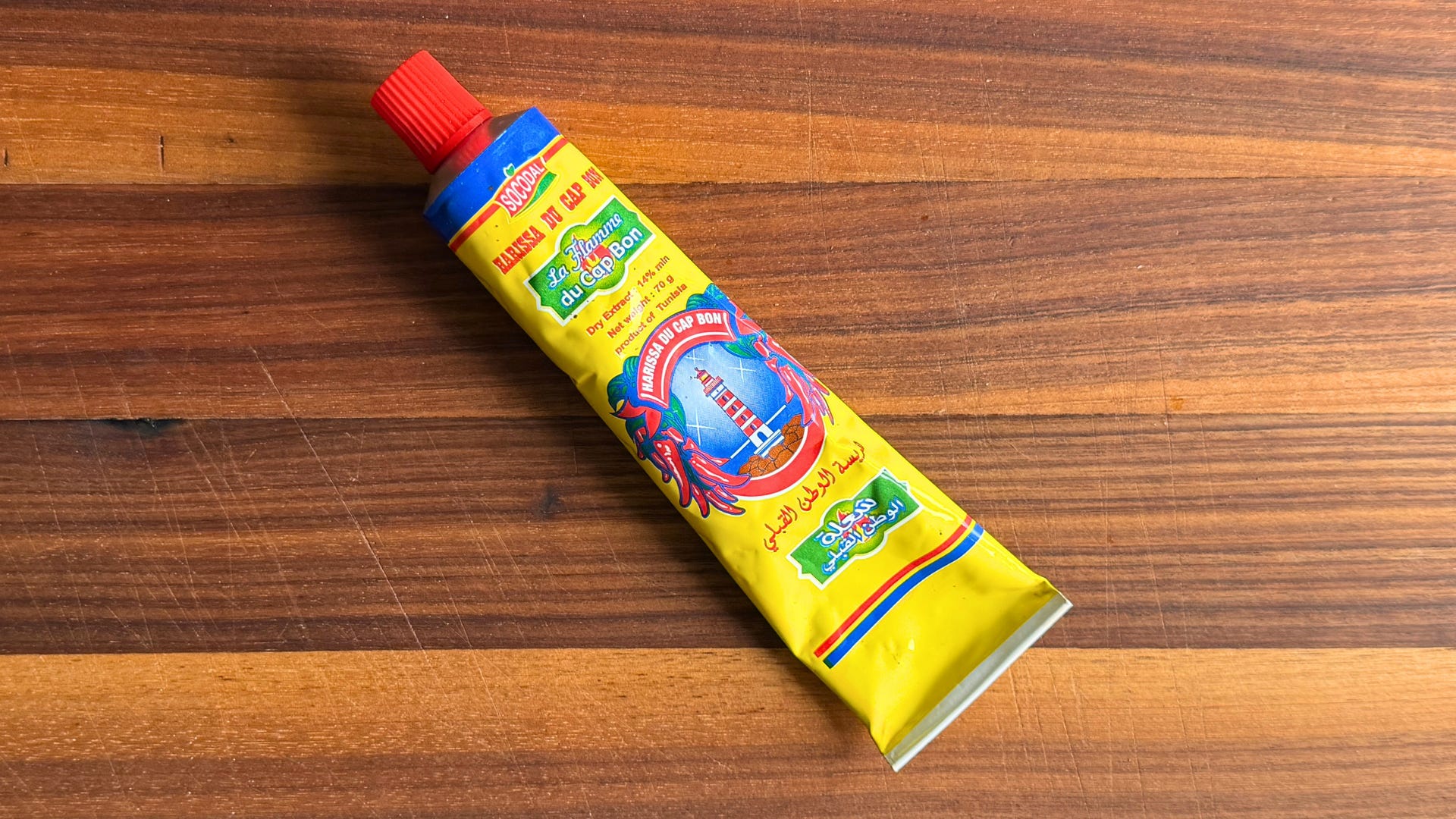
Harissa is one of those ingredients that looks like a condiment but behaves like a flavor transformation. I am never without a tube, frequently one that is front-of-fridge because it’s reached for so often.
Made from roasted red peppers, dried chilies, garlic and warm spices — cumin, coriander, caraway — it’s been a staple of North African cooking for centuries, particularly in Morocco and Tunisia.


What it does to chicken is remarkable. The paste works its way into the meat during the marinade, and when it hits a hot oven, it caramelizes against the skin and the vegetables in a way that fills the entire house with something that smells deeply, unmistakably Mediterranean.
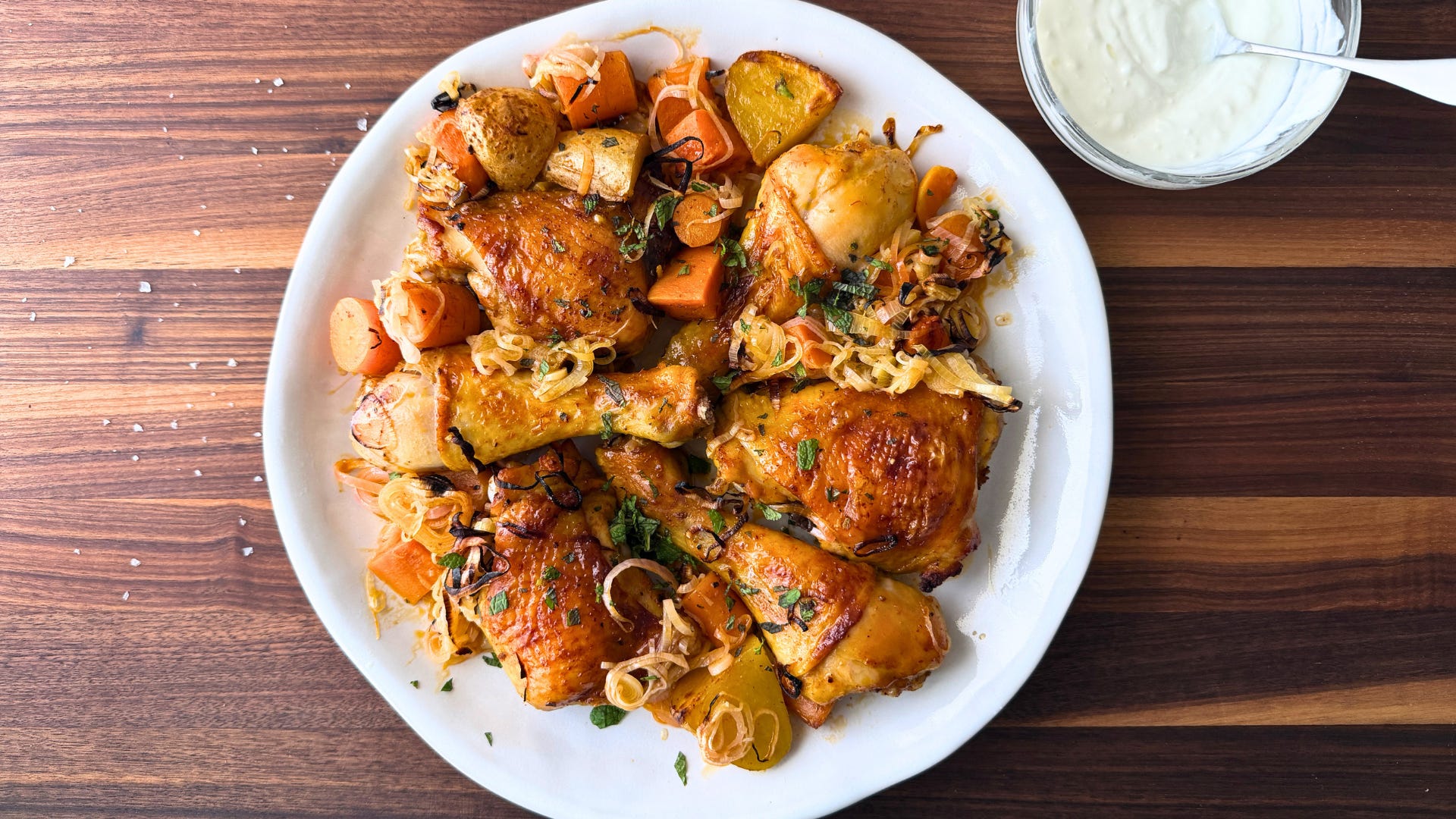
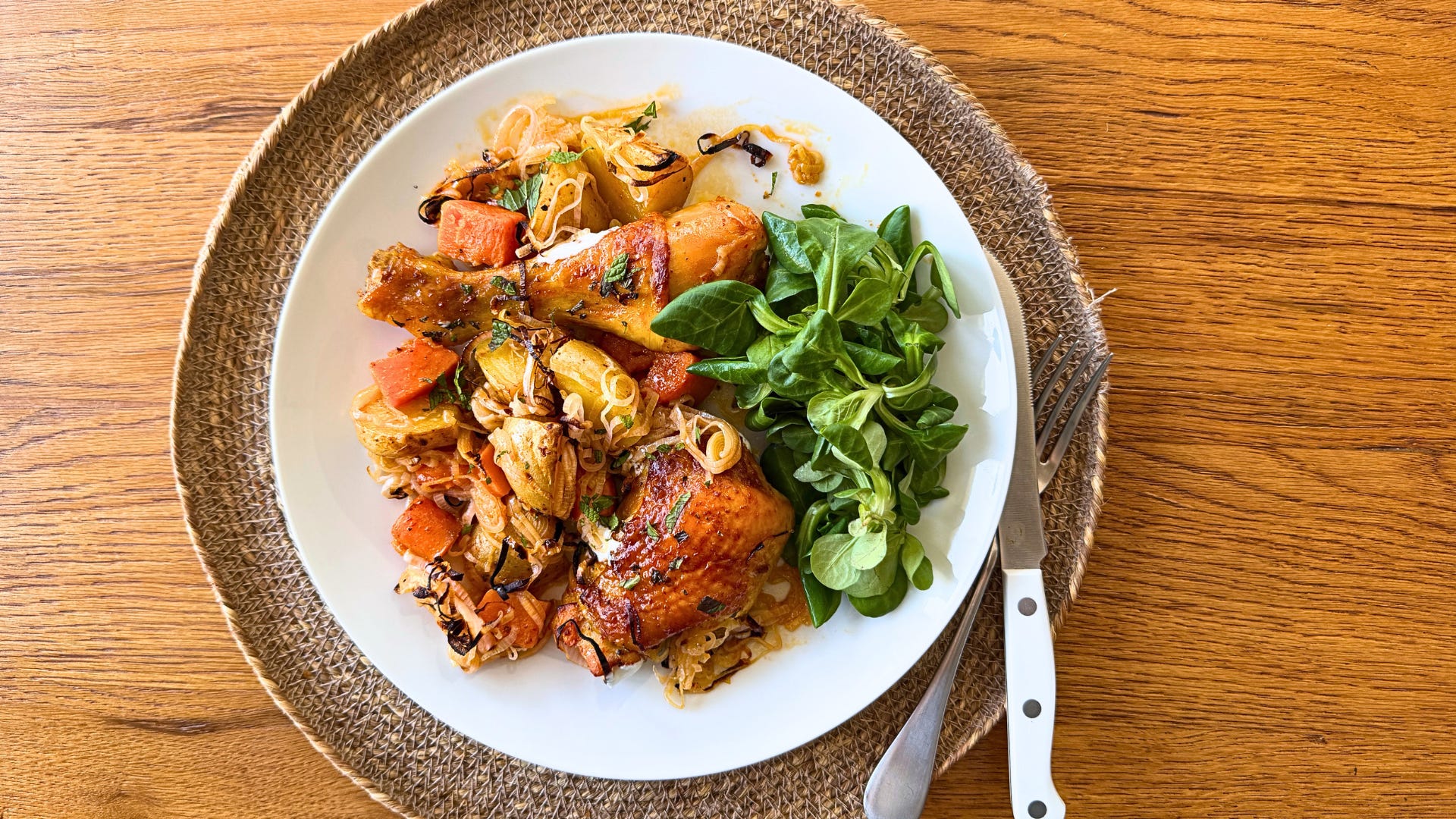
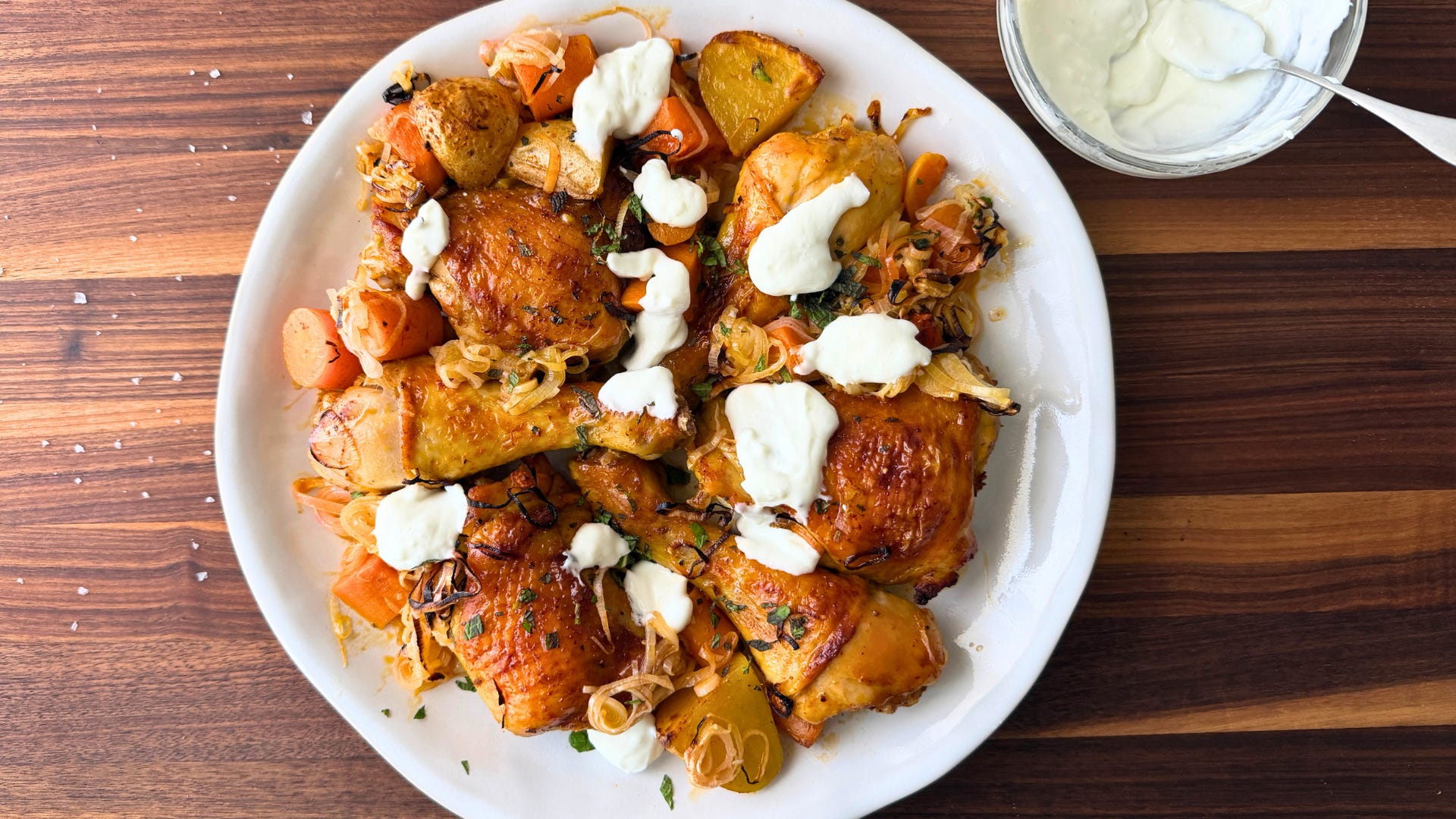
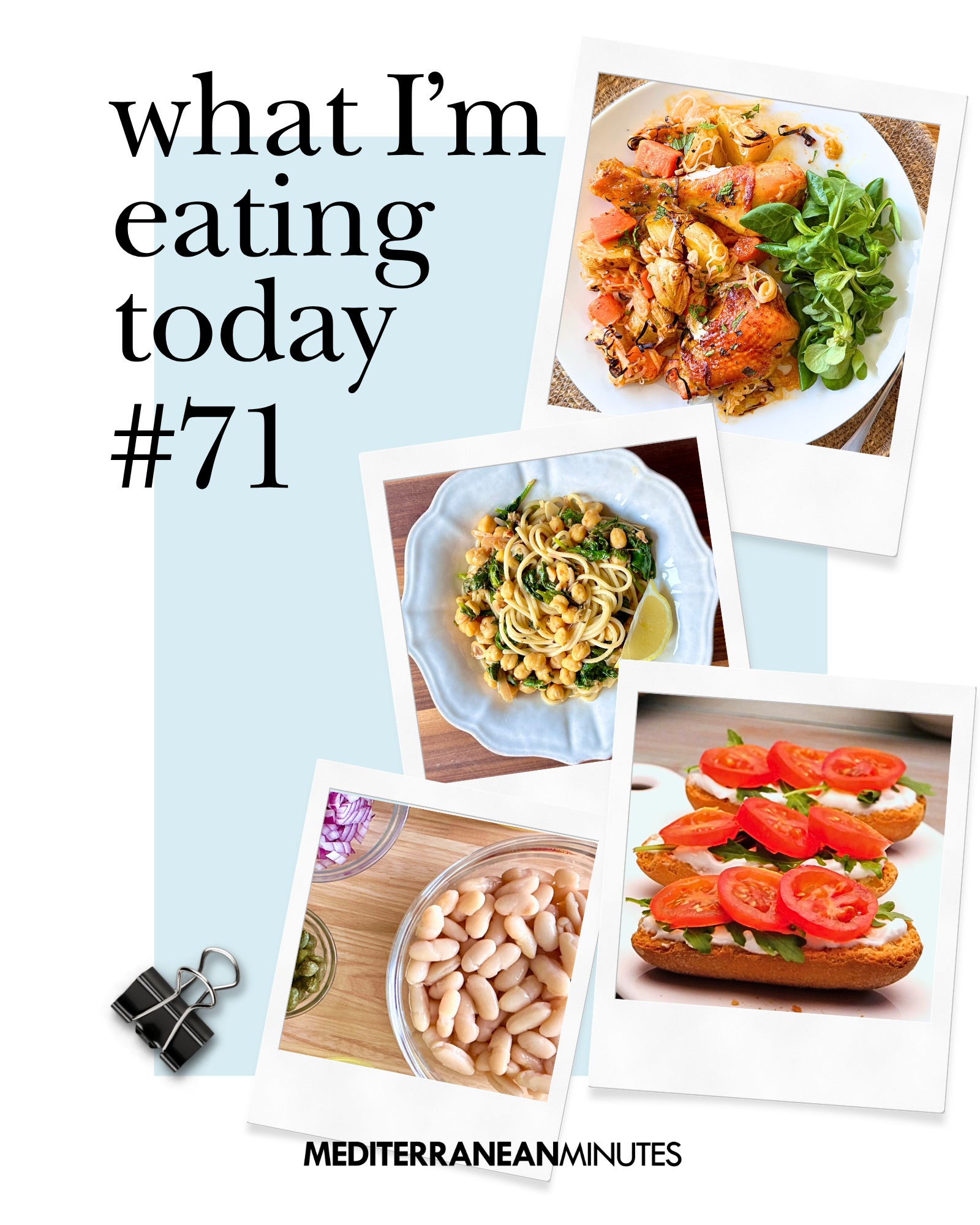
The combination here is simple and very forgiving. Chicken thighs and legs — the flavorful, stay-moist cuts — roasted with sweet potato, white potato and carrots, finished off with wilted leeks and a cool lemon-garlic yogurt drizzle that cuts right through the heat.
And if you want to make it along with me, just click on the video below (right AFTER you finish reading the newsletter!)
I serve it with warm wholegrain pita, a few good olives and extra yogurt sauce on the side. In late May, when the first summer warmth is arriving in Alicante, it hits exactly right. Today, I had a bunch of watercress that was a perfect stand-in for the cucumber salad and a handful of mint leaves and fresh basil instead of parsley.
The moral of this tale: it’s never wrong to go with what you’ve got.
On today’s menu
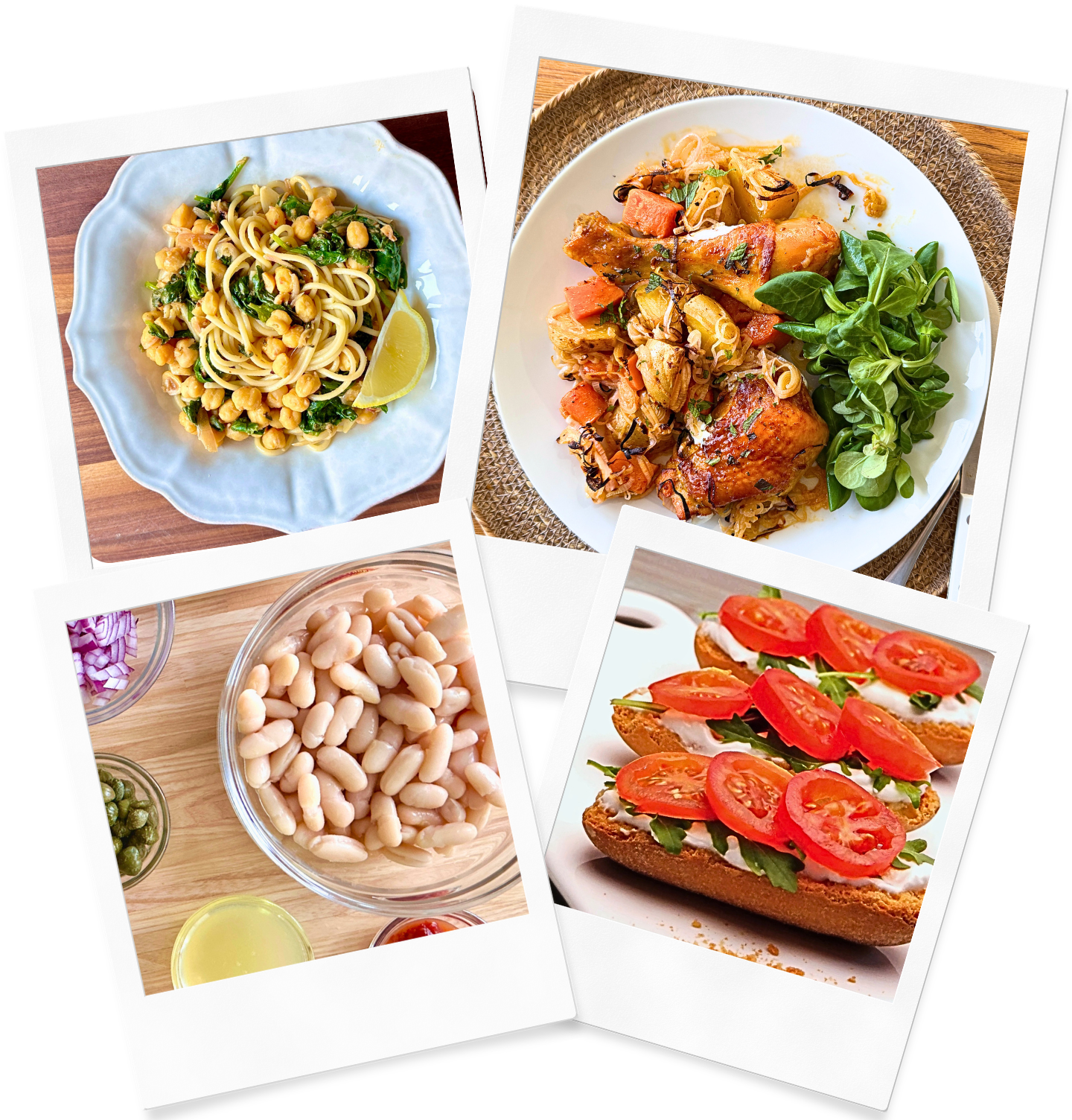
The full day is built to balance the richness of the harissa chicken at lunch with lighter, fresher flavors throughout the rest of the day — a yogurt and ricotta morning, beans for a mid-morning snack, cool watermelon in the afternoon, and a simple pasta e ceci in the evening that brings the legume story full circle.
It’s a satisfying, complete Mediterranean day at around 2,000 calories, with macros that sit comfortably within the guidelines. Remember those?
50-55% healthy carbs (mostly veggies and fruit)
25-30% healthy fats (mostly extra virgin olive oil)
15-20% healthy proteins (mostly plants, fish, seafood and birds).
A quick note on the numbers
Harissa chicken is not a light dish — and it’s not meant to be. The olive oil in the marinade, the skin-on cuts, the yogurt sauce — these are all quality fats doing real work. The day as a whole lands at around 30% fat, right at the top of the Mediterranean guideline range, and that’s fine. These are the fats that belong in this way of eating.
Protein sits at about 17% across the day, which is well within range and appropriate for keeping energy steady. Carbs come from whole sources throughout — wholegrain bread, sweet potato, pita, cannellini beans, chickpeas pasta. No refined anything.
It’s a full, nourishing day. The kind that feels indulgent but is actually doing its job.
To give you a few more ideas about why chicken deserves a permanent place in your kitchen, you’ll find a few extra recipes from my archives in the menu PDF besides the meal plan.
If you’re already a paid subscriber then you know these little extras show up almost every week as a small bonus to show my appreciation for your support. If you haven’t yet had the chance to join us, what are you waiting for?
But right now, it’s time to pull up a chair, grab a glass or cup, and join me in my Mediterranean kitchen while we work our way from one flavor-packed meal to another.
Disclaimer: The nutritional information provided in Mediterranean Minutes is intended for general guidance only and is not a substitute for personalized medical or dietary advice. Individual needs vary. Please consult a qualified health professional before making significant changes to your diet.
