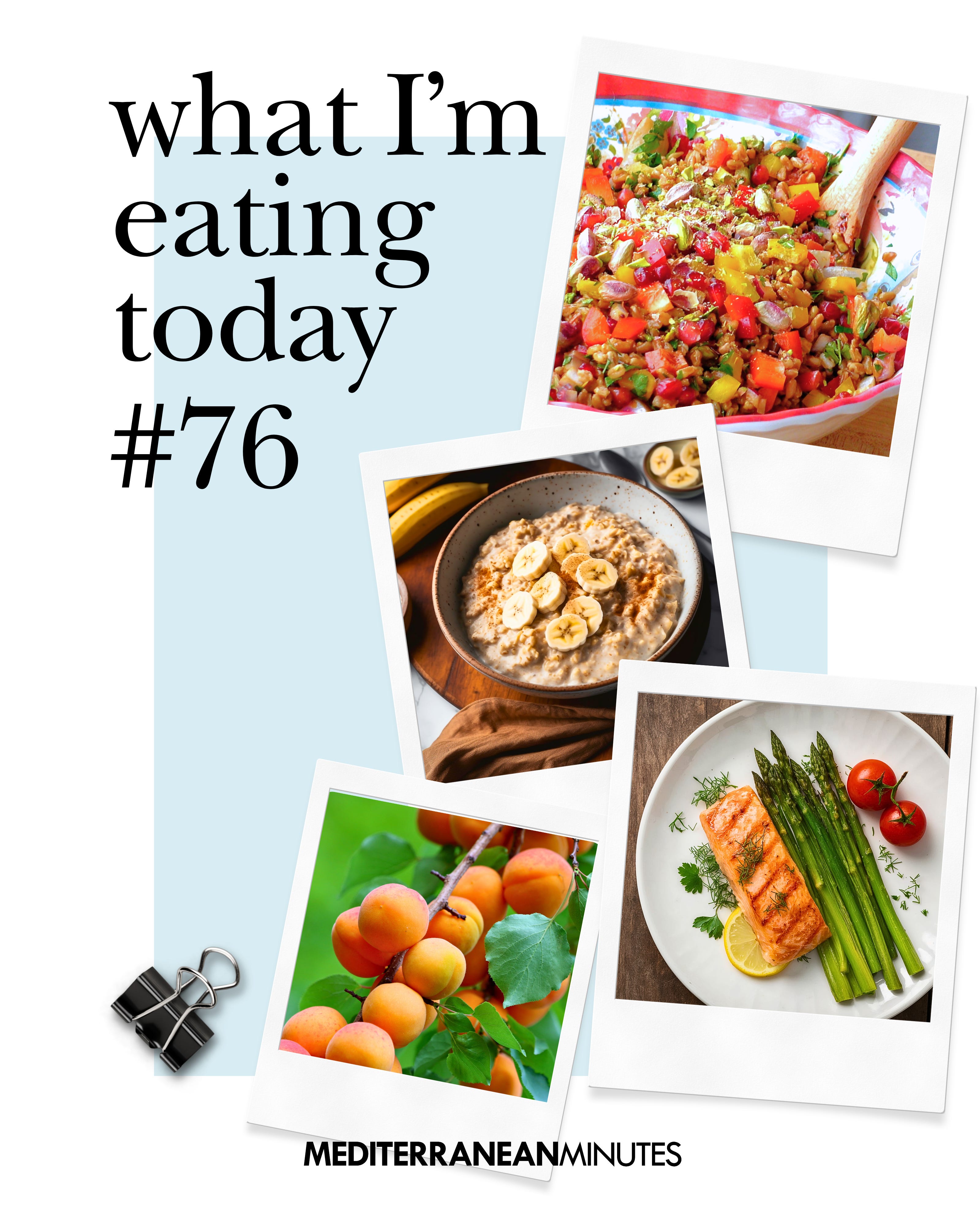
mediterranean diet: healthy menu meal plan #76
back where it all started

Living in the Mediterranean will do things to your pantry. If you’ve been reading the newsletter lately, you might remember the little reveal of my grains drawer.
What you might not know is how that drawer started.
One bag. One grain. Farro.
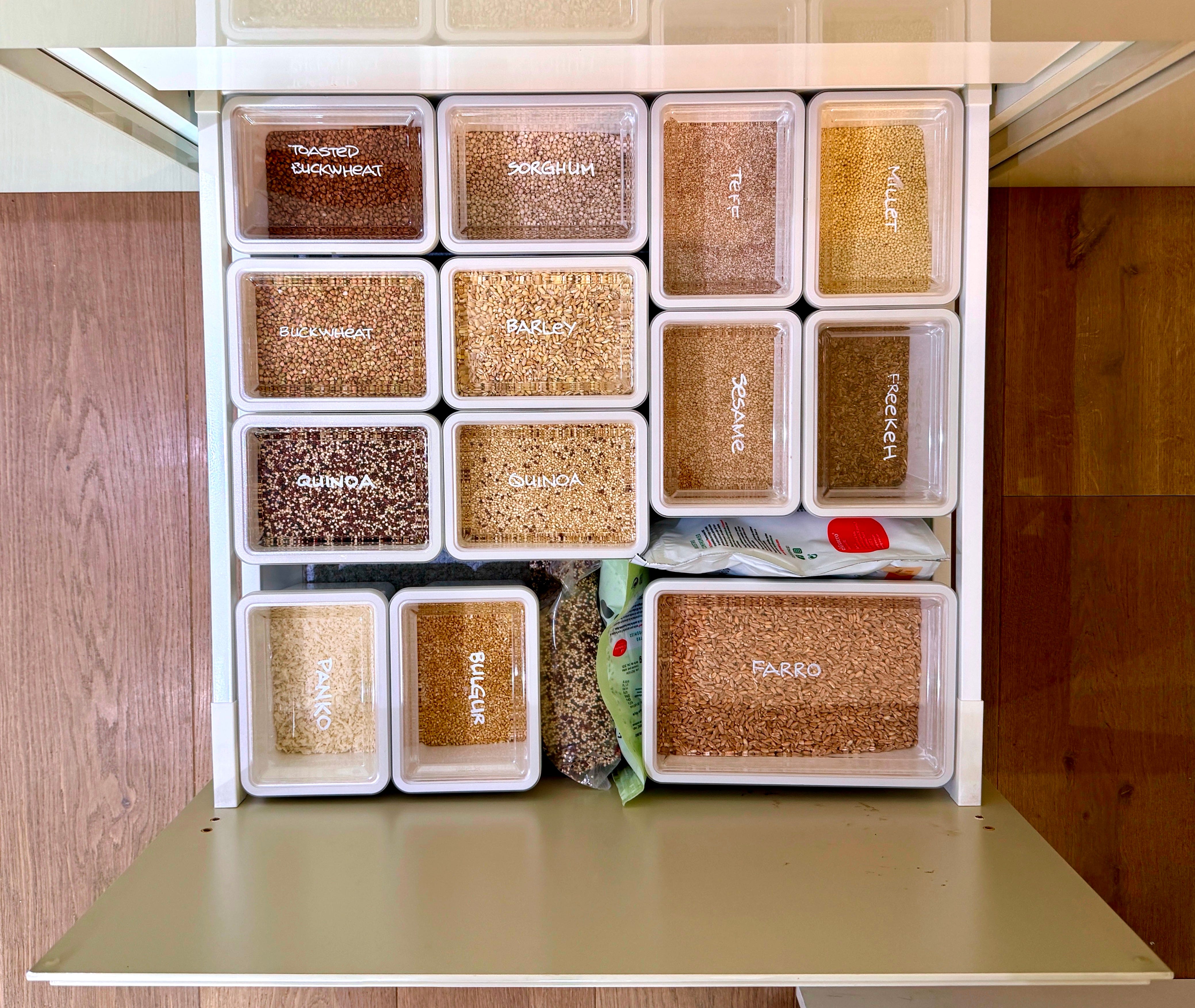
I found it at Alicante’s Mercado Central, brought it home, cooked it, fell completely in love with it, and then — in the way that these things tend to go — got wildly distracted by everything else. Barley. Buckwheat. Bulgur. Freekeh. Teff. Millet. Sorghum. Three kinds of quinoa. I went deep, I went wide, and I had a whole bunch of fun doing it.
But here’s the thing about going wide.
You find out what you actually keep coming back to.
And for me, every single time, it’s farro. Perhaps that’s why its share of the drawer space is twice what every other grain gets.
But before I get ahead of myself, I want to address…
the elephant in the room
There’s a question I get asked a lot about: the Mediterranean diet and carbohydrates. People see a macronutrient split with 50 to 55% of calories from carbs and immediately get nervous. It looks like exactly the kind of eating they’ve been told to avoid.
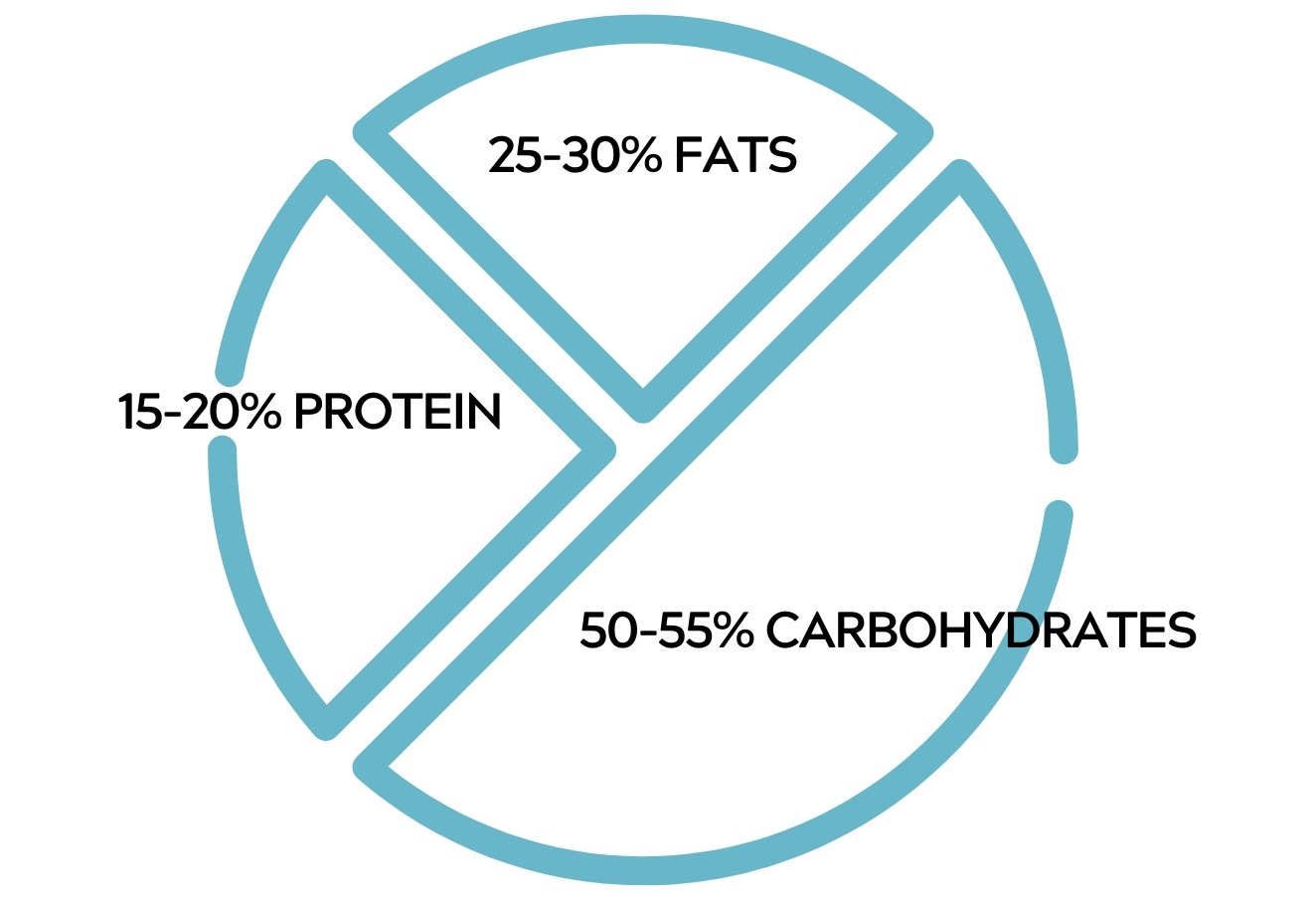
But the Mediterranean diet isn’t built on the most popular refined grains like white pasta, white rice, white bread and dinner rolls.
It’s built on fruits, vegetables and whole grains — all complex carbohydrates that digest slowly, feed your gut bacteria, and arrive bundled with the fiber and micronutrients your body needs to actually function well.
what makes it work
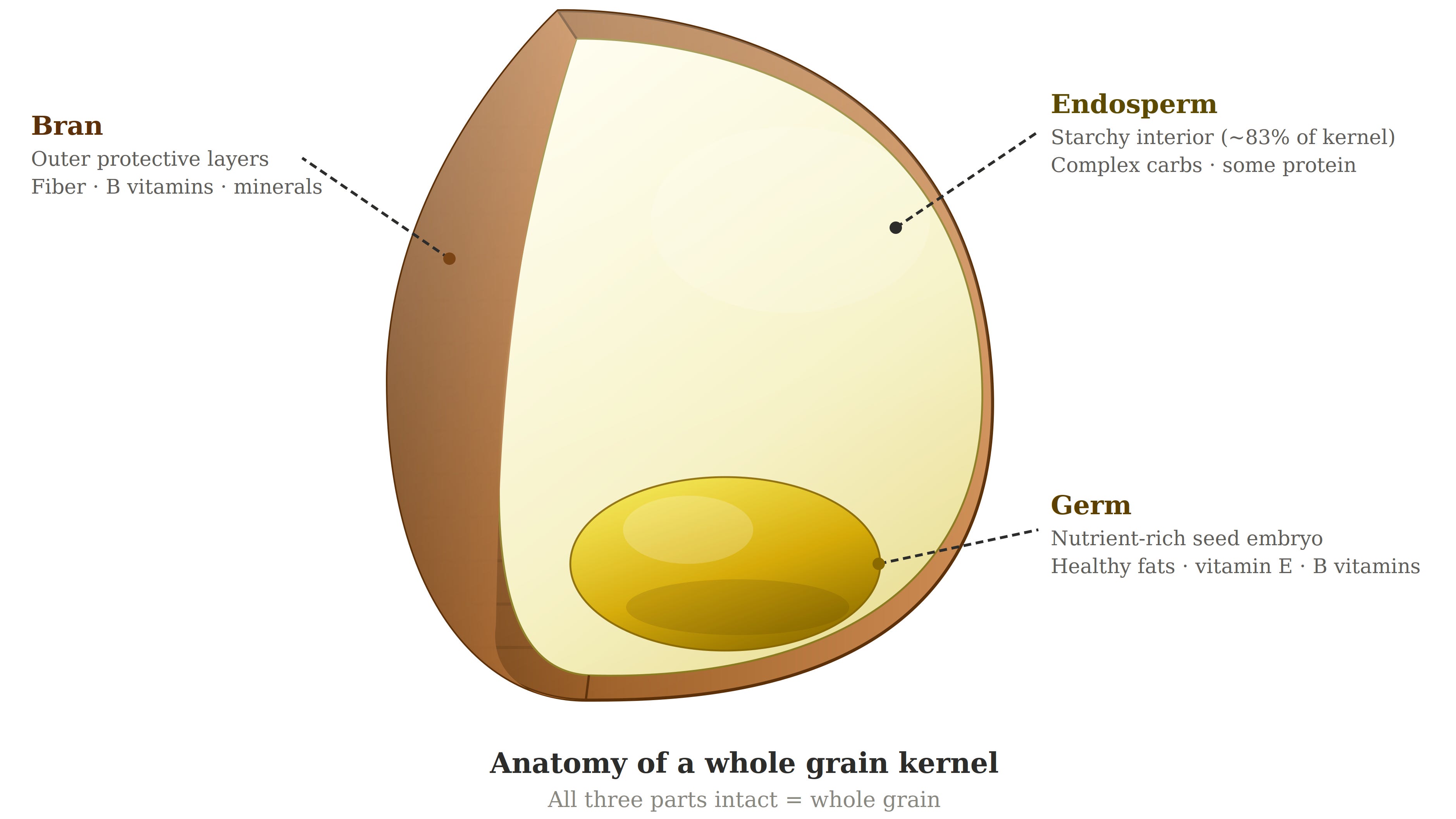
The Mediterranean diet recommends three to six servings of whole grains every day. Not refined grains — but the real thing. The whole kernel. Bran, germ, and endosperm intact.
Here’s why that distinction matters so much.
When a grain is refined, almost everything useful gets stripped away in the milling process. What’s left is essentially just the starchy interior — fast carbs with very little fiber, very few minerals, and none of the antioxidants and phytochemicals that made it worth eating in the first place.


Whole grains work completely differently in your body.
The fiber slows digestion, which means blood sugar stays steadier and hunger stays quieter for longer. The B vitamins — thiamin, riboflavin, niacin, folate — show up in meaningful amounts. So do iron, magnesium, zinc, and selenium. And the polyphenols and carotenoids that whole grains carry reduce inflammation in ways that add up over years of eating well.
Once that clicked for me, hitting three to six servings a day stopped feeling like work and started feeling like the easy part — because there are just so many good options.
Oats in the morning that keep you going until lunch without the 10am slump. Bulgur or buckwheat that you can get on the table in fifteen minutes. Quinoa with more protein per cup than almost anything else in the plant world. Barley with the lowest glycemic index of any grain and my favorite childhood memory - a hot, chewy bowl of chicken barley soup on a cold snowy day.
And farro. Which has its own treasured spot in my head and my pantry.
I made an entire video on the fundamentals of whole grains — including farro and where it sits in the Mediterranean diet — and if you haven’t watched it yet, you might enjoy it. It covers everything I wish someone had told me when I was standing in front of that grain stall for the first time.
playing favorites
I’ve covered a lot of ground in that drawer since the beginning — and I stand by every grain in it. But farro has a few things going for it that nothing else quite matches.
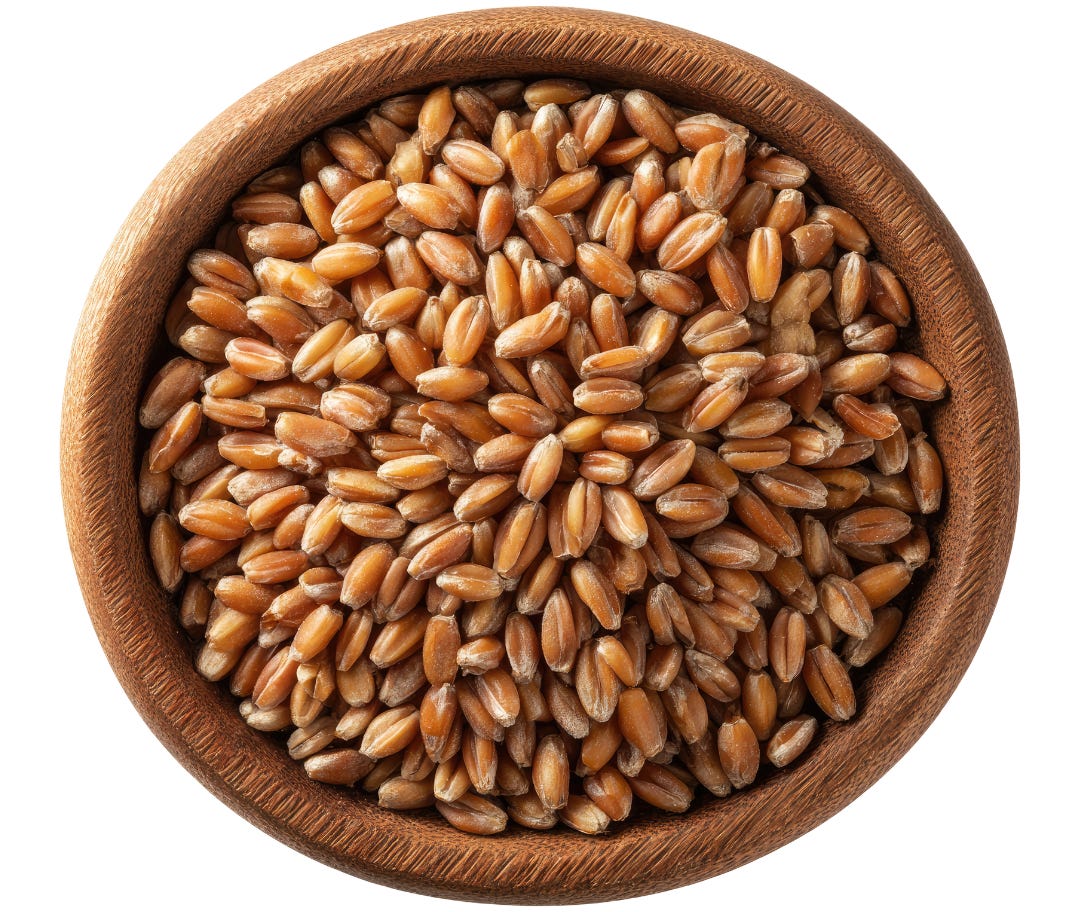
One serving covers around 20% of your daily fiber needs, which is a strong return for something that tastes this good. It delivers niacin, magnesium, and zinc alongside polyphenols, carotenoids, and selenium — a lineup of antioxidants that support heart health, blood sugar regulation, and brain function in ways that accumulate slowly but meaningfully over time.
It comes in three varieties — emmer, einkorn, and spelt — and it benefits from an overnight soak if you can manage it. Minutes to prep, fewer minutes to cook, easier on the digestive system. Same principle as soaking beans, same payoff.
And then there’s the flavor. Toasty, nutty, satisfyingly chewy. The kind of flavor that makes you wonder why you ever bothered with anything blander.
The cooking itself is straightforward. You can watch how it’s done on another of my YouTube videos if you want to cook along with me.
And it’s worth knowing that batch cooking and freezing in perfect serving-sized portions was made for this grain. It holds up really well for 2-3 months in the freezer.
this week’s recipe
Today’s recipe takes that cooked farro somewhere worth going. It’s a classic in the Mediterranean region using classic Mediterranean ingredients.
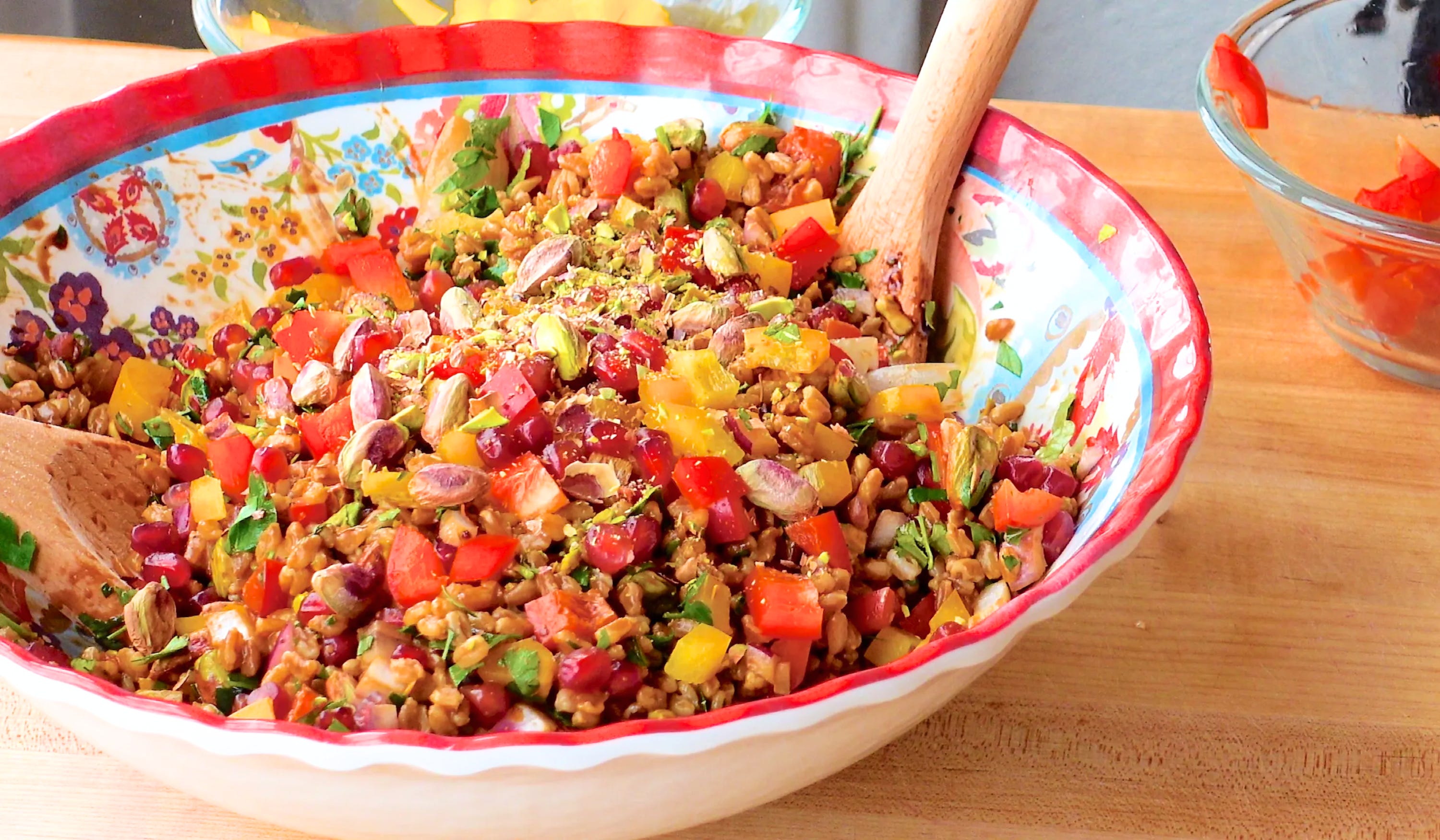
Bell peppers, pomegranate seeds, red onion, pistachios, and a generous handful of fresh parsley, all brought together with a dressing built on pomegranate molasses, lemon juice, and good olive oil.
It’s bright and chewy and colorful and luscious — the kind of salad that makes you want to make a double batch just so you have it for the rest of the week.
Which, for the record, is exactly what I plan on doing (and BTW, I store the prepped ingredients in separate little glass boxes and toss them together just before I want to enjoy it, dressed at the last minute so it doesn’t get soggy).
One batch makes six servings. Make it on a Sunday and lunch is essentially handled until Thursday. It’s the kind of weekday win that makes this way of eating so sustainable in the long run.
The full recipe is in the PDF below, along with three bonus recipes from the archives that I put together specifically for this week’s theme.
If you’re a paid subscriber already — genuinely, thank you. Every issue I write is possible because you’re here. Your PDF with the complete recipe, the full day’s menu, and the shopping list is just below.
If you’ve been reading the free issues and wondering what’s behind the paywall — the recipe PDFs, the full menus, the shopping lists, the archive — this week is a good one to step through.
The farro is in the pot. The pomegranate arils are ready and waiting. Please come & join me in my Mediterranean kitchen as we work our way from one flavor-packed meal to another.