

mediterranean diet: healthy menu meal plan #73
the only true fundamental of the Mediterranean diet

Hola! I’ve wanted to write a newsletter about olive oil and the role it plays in the Mediterranean diet. But every time I get started, I don’t know where to stop.
Today, I’ve decided to take another stab at it. And my greeting was the first hint.
H-O-L-A. The single easiest mnemonic (or “tricky way to remember stuff”) for the four most important factors in taking care of this precious ingredient.
Heat. Oxygen. Light. Age.
I’ll get back to these points in a minute, but for now, I want to muse on the single most important ingredient in the Mediterranean diet and why you’ve seen it in every single Healthy Menu Meal Plan on my Substack.
Extra virgin olive oil.


what makes it essential
For over 22 years, there’s been a bottle of extra virgin olive oil within arm’s reach in my kitchen. Because it never makes sense to stash it away deep in the pantry. It’s in everything.


The toast in the morning. The potatoes at lunch. The salad dressing I make the same way every single time and never measure. The pan I reach for at dinner before I’ve even decided what we’re eating.
If the Mediterranean diet had a mascot, it would not be a plate of glistening grilled fish or a refreshing bowl of quinoa studded with feta cheese. It would be a dark bottle of extra virgin olive oil resting in the fridge or sitting on a kitchen counter (away from the window and away from the stovetop).
my long-standing love affair
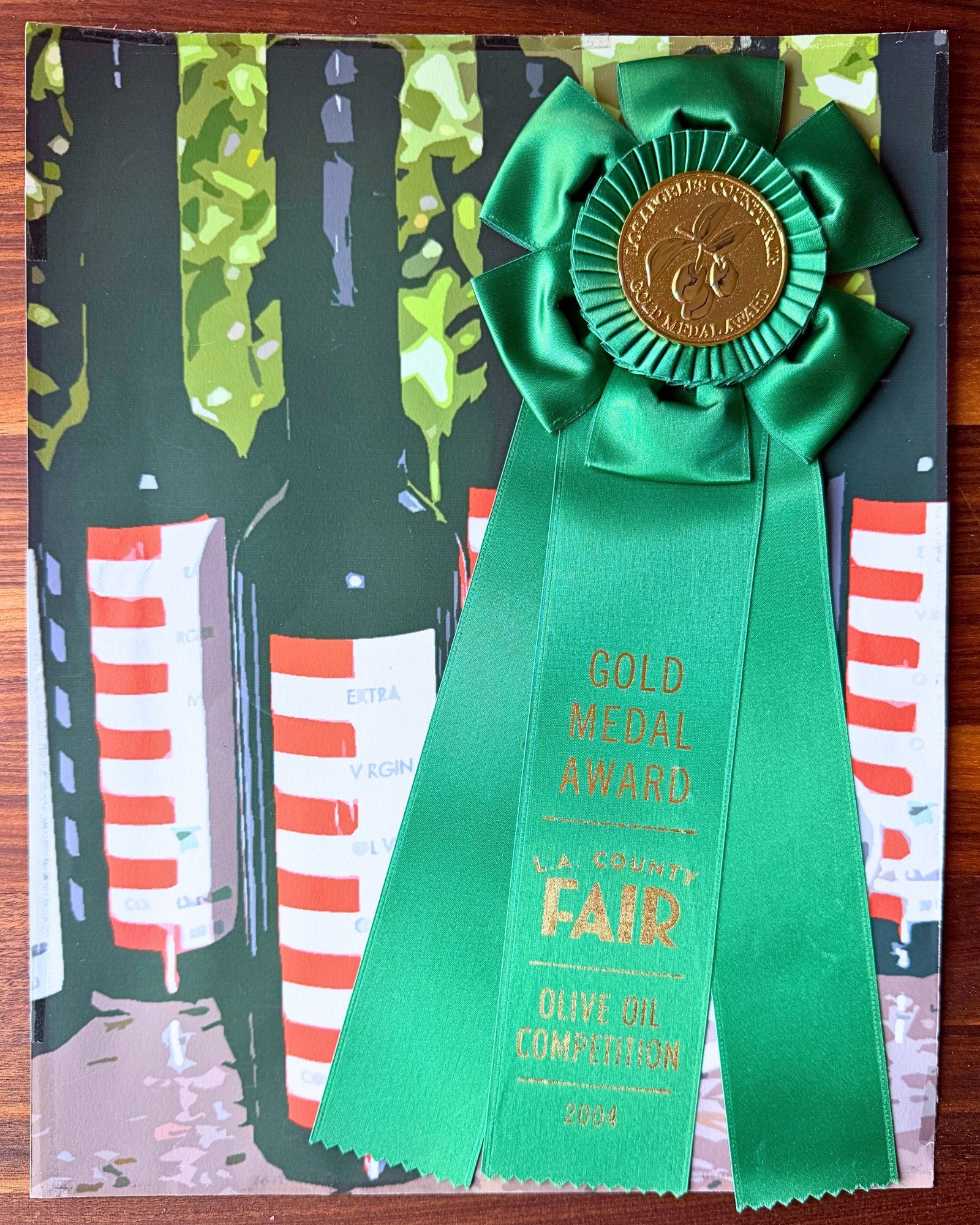
It all began when George and I started producing olive oil in the Santa Barbara hills of California in 2003. I devoured everything I could study, ended up editor of the #1 website in the world dedicated to olive oil and being invited to speak at industry conferences.
It continued when we moved to Spain, bought a small farm with far fewer trees but still enough to press and enjoy the fruits of our labor.
And at this point, I don’t think I could manage without it.
what’s on the menu
This week’s Healthy Menu Meal Plan is a perfect example of what I mean — which, honestly, isn’t that different from any other week around here.
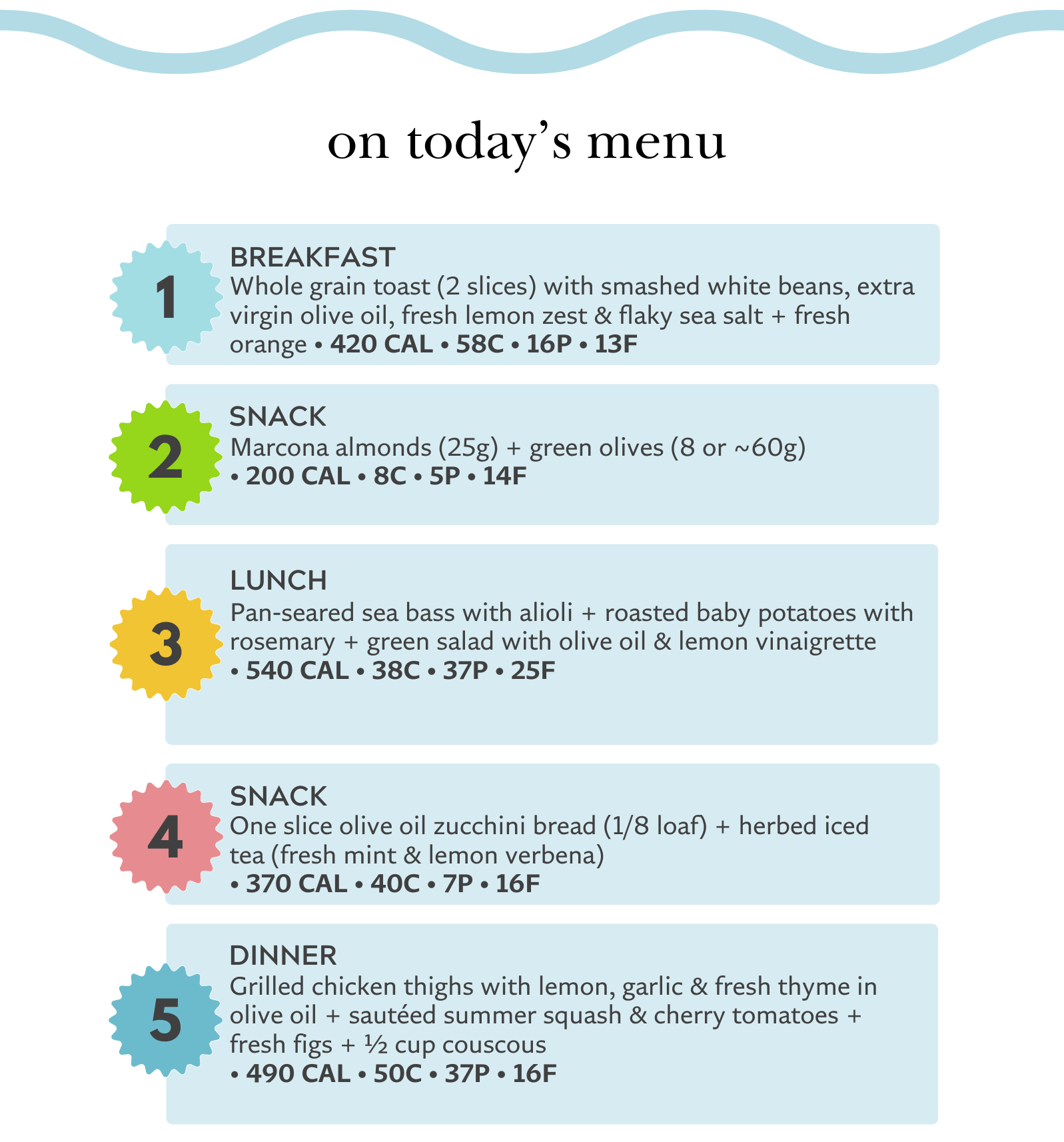
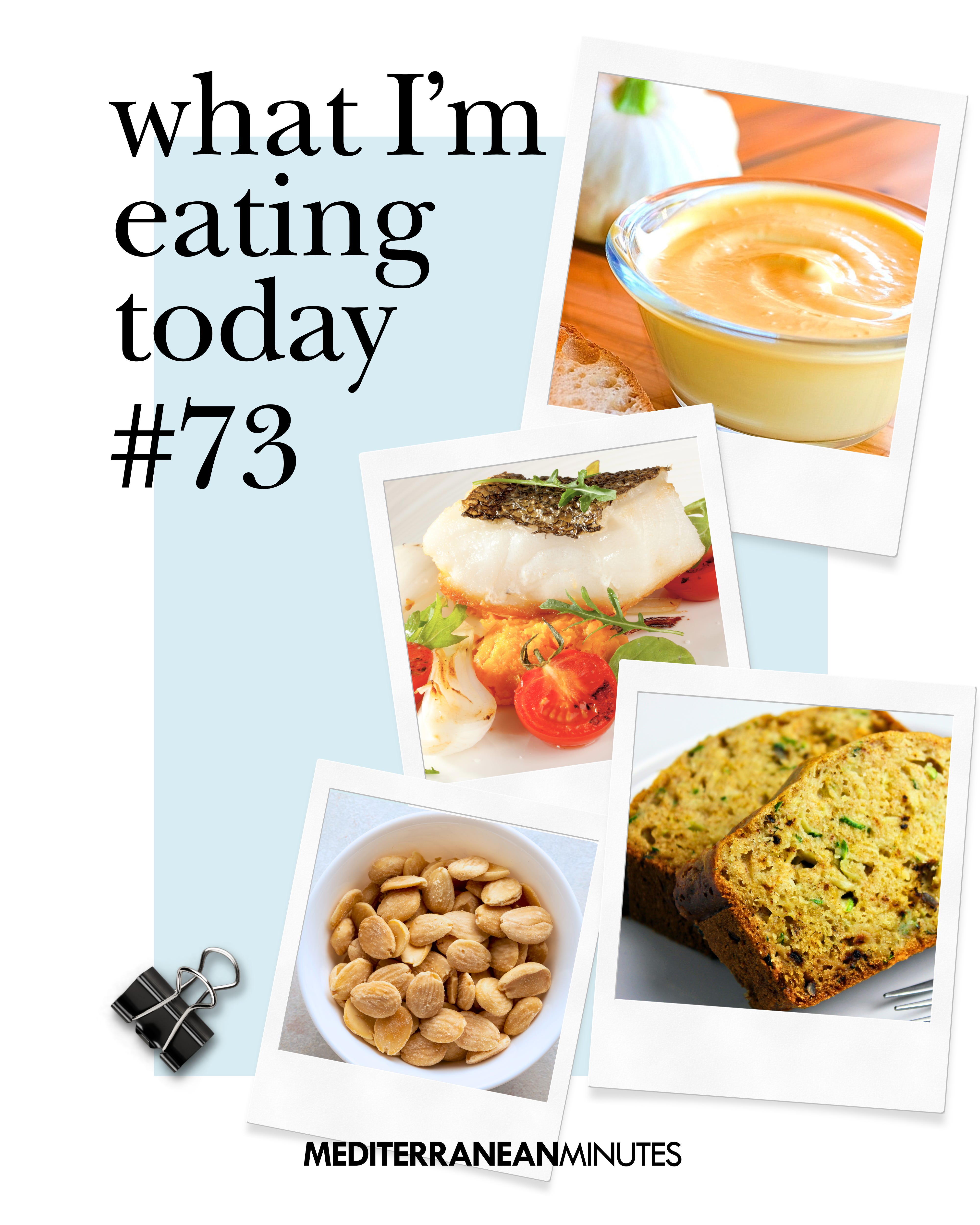
Breakfast is crunchy whole grain toast with smashed white beans, a good drizzle of the good stuff, and a fresh orange. Mid-morning, a small bowl of marcona almonds and green olives — the kind of snack that requires zero effort and makes you feel very Mediterranean.
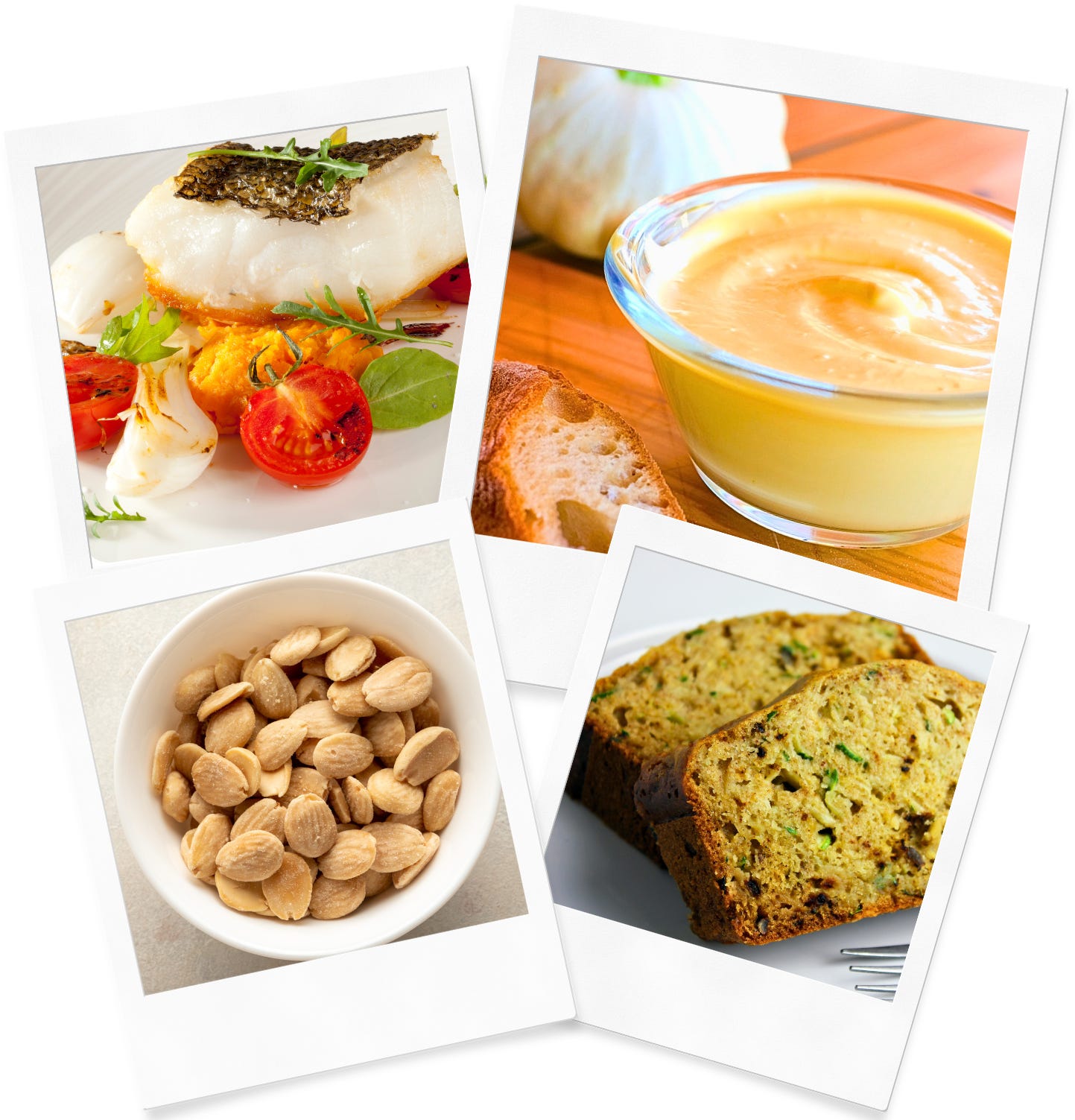
Lunch is where it gets interesting. Pan-seared sea bass, baby potatoes roasted with rosemary, a green salad — all perfectly fine on their own. But served alongside a bowl of that Spanish kitchen indispensable, alioli? Completely different meal.
The afternoon snack is something new: a slice of olive oil zucchini bread with a glass of herbed iced tea.
And dinner is grilled chicken thighs with summer squash, cherry tomatoes, fresh figs, and couscous. Light, seasonal, utterly effortless.
Your morning snack skips the ever-present essential, but the rest of the day, don’t put the bottle away!
the one ingredient you actually want… to understand
I made a four-part series about olive oil on YouTube because I kept being asked the same questions over and over.
“What’s the difference between extra virgin and regular? How do I know if it’s fake? Can I cook with it? Do I really need two bottles?”
Yes to the last one. You really do need two bottles.
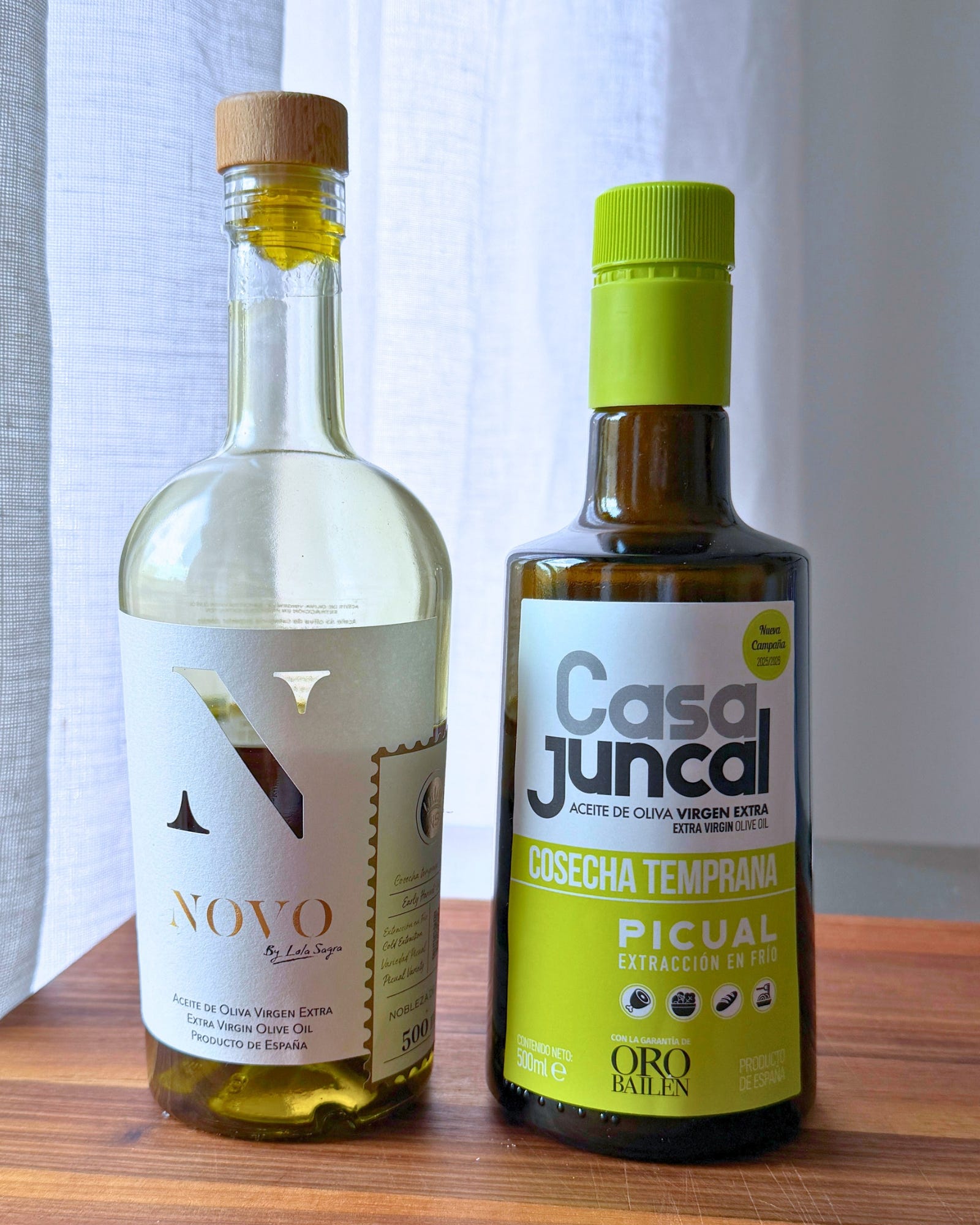
One really good extra virgin for finishing and dressing — the one that actually adds a distinct flavor to the dish. And one decent everyday olive oil for cooking. If budget is a factor, virgin olive oil — not light, not “pure,” not refined — can be your second bottle. It costs less, it has a slightly higher smoke point, and it won’t interfere with the flavor.
making the grade
Extra virgin is the first cold pressing of fresh olives — no heat, no chemicals. Think of it like fresh-squeezed orange juice. Olives are a fruit too.
So what would you rather have: juice pressed straight from the tree, or what’s left after the the fruit’s being sitting around for days or has already been pressed once and is being run through the mill a second (or third) time?
That second pressing is virgin olive oil. It’s not bad. It’s just not as good.
And then there is “light” or “pure” olive oil — please don’t bother. They’re just marketing terms that mean flavorless and colorless (and possibly not olive oil at all). The calories are identical to any other fat: around 110 per tablespoon and it’s been stripped of its healthiest qualities like antioxidants (polyphenols like oleocanthal) and vitamin E.
Extra virgin has the highest concentration of polyphenols — the compounds that make a really good oil taste slightly bitter and peppery, and sometimes catch at the back of your throat when you taste it straight.
That catch is not a flaw.
It’s a feature. George and I used to make what was known as a “two-cough oil” on our California farm — early harvest, super spicy, ridiculously aromatic. We loved it.
the smoke point story — let’s set the record straight
This is the question I get more than almost any other: “can you actually cook with extra virgin olive oil, or will it lose all its best values the moment it hits a hot pan?”
Here’s the thing. Extra virgin olive oil starts smoking somewhere between 350°F and 465°F. The ideal temperature for sautéing or frying almost anything at home is around 375°F. Which means you are almost certainly fine.
The alarm about smoke point has been, in my opinion, blown way out of proportion. The research backs this up.
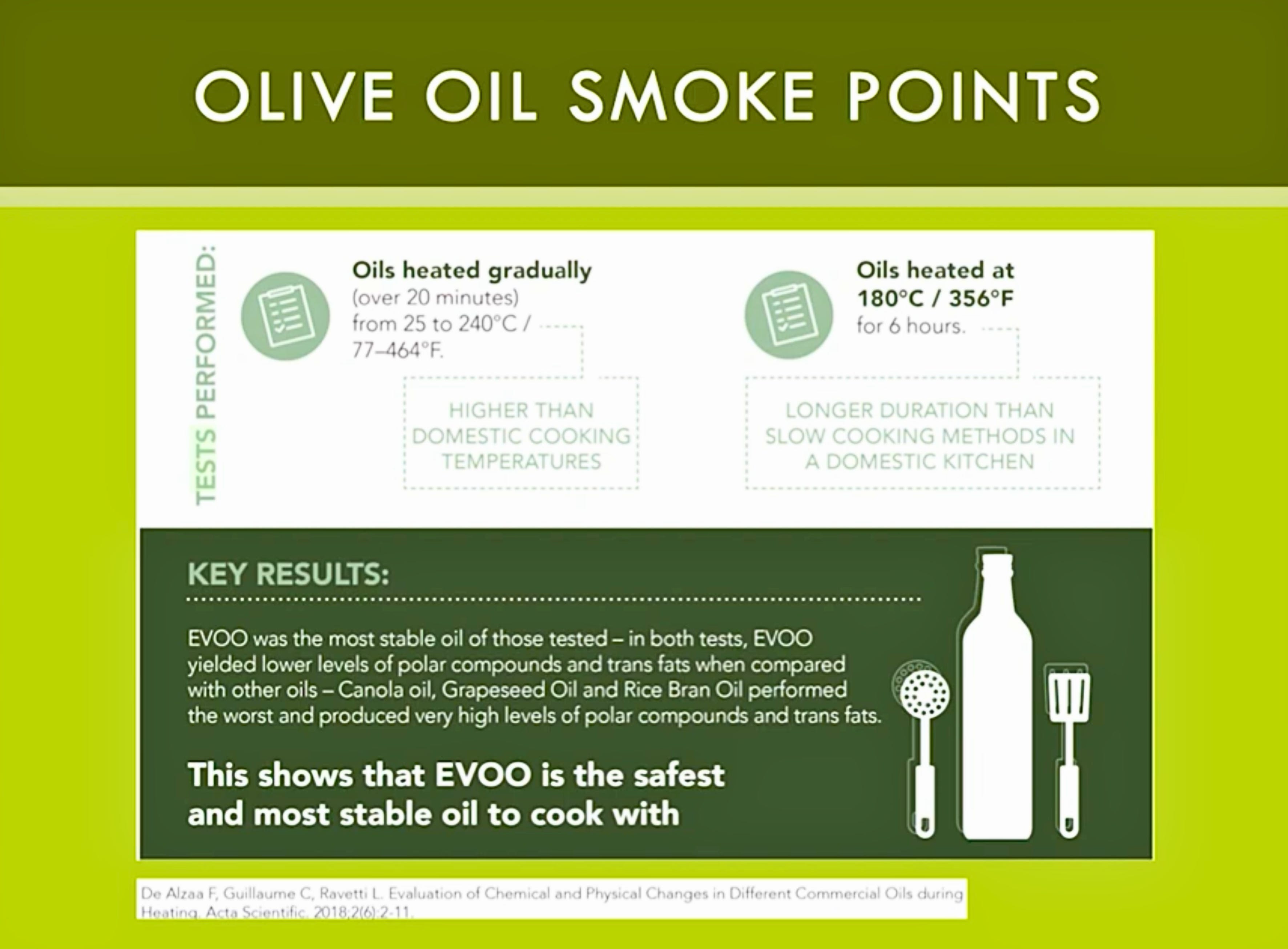
Where olive oil does start to break down is with repeated use — the way restaurants cycle oil through a fryer all day. At home, cooking a piece of sea bass or sautéing summer squash? You are nowhere near that threshold.
T.L.C.
The four things that genuinely degrade olive oil — whether you’re cooking with it or storing it — is the introduction of heat, oxygen, light, and age. And now we’re back to where we began.
The rules are super simple:
Heat: Store it away from the stovetop and not on the windowsill.
Oxygen: Store it sealed up tight. Bag-in-box packaging is the very best.
Light: In a dark bottle, away from that sunny window.
Age: It’s not wine. It doesn’t improve with age. Don’t make the mistake of saving it for special occasions.
So that’s the story about olive oil and how to enjoy it every day, including today’s meal plan. A menu built around the one ingredient that has been sitting on Mediterranean counters, more or less unchanged, for four thousand years.
As always, you'll find a few extra treats in the menu PDF besides the meal plan I promised you (mostly because I just can't help myself). When I can, I'll reach into the archive so that you don't have to go hunting around.
If you’re already a paid subscriber, you already know this is just one of the small extras that show up almost every week — my way of saying thank you for being part of this community.
And if you’ve been on the fence about joining, this might just be a great week to see what you’d be getting.
But right now, it’s time to pull up a chair, grab a glass of something cold or a cup of something hot, and join me in my Mediterranean kitchen while we work our way from one flavor-packed meal to another.

Disclaimer: The nutritional information provided in Mediterranean Minutes is intended for general guidance only and is not a substitute for personalized medical or dietary advice. Individual needs vary. Please consult a qualified health professional before making significant changes to your diet.
I have 4 different EVOO here and no other oil in my house. I do store in the pantry as it’s the only place to keep it out of the light as my kitchen is always very sunny. I was recently able to purchase some early harvest oil from where I get mine from and the flavour is so good and I’d say my favourite but expensive but it does come in a special bottle I then wash and reuse. Love this newsletter and the recipes in it. I miss your YouTube channel. Might have to go rewatch them all 😅